
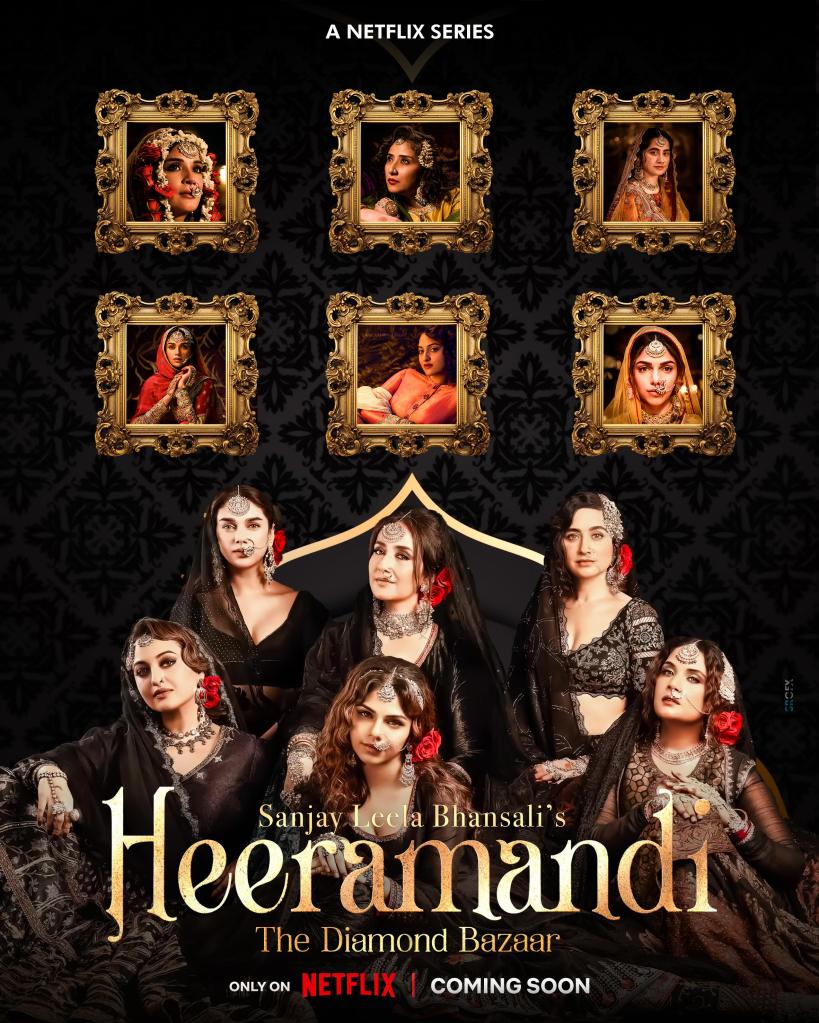
Heeramandi (2024), Netflix, 8 Episodes


| Genre | Historical drama |
|---|---|
| Created by | Sanjay Leela Bhansali |
| Written by | Screenplay: Sanjay Leela Bhansali Dialogues: Divya Nidhi Vibhu Puri |
| Story by | Moin Baig |
| Directed by | Sanjay Leela Bhansali |
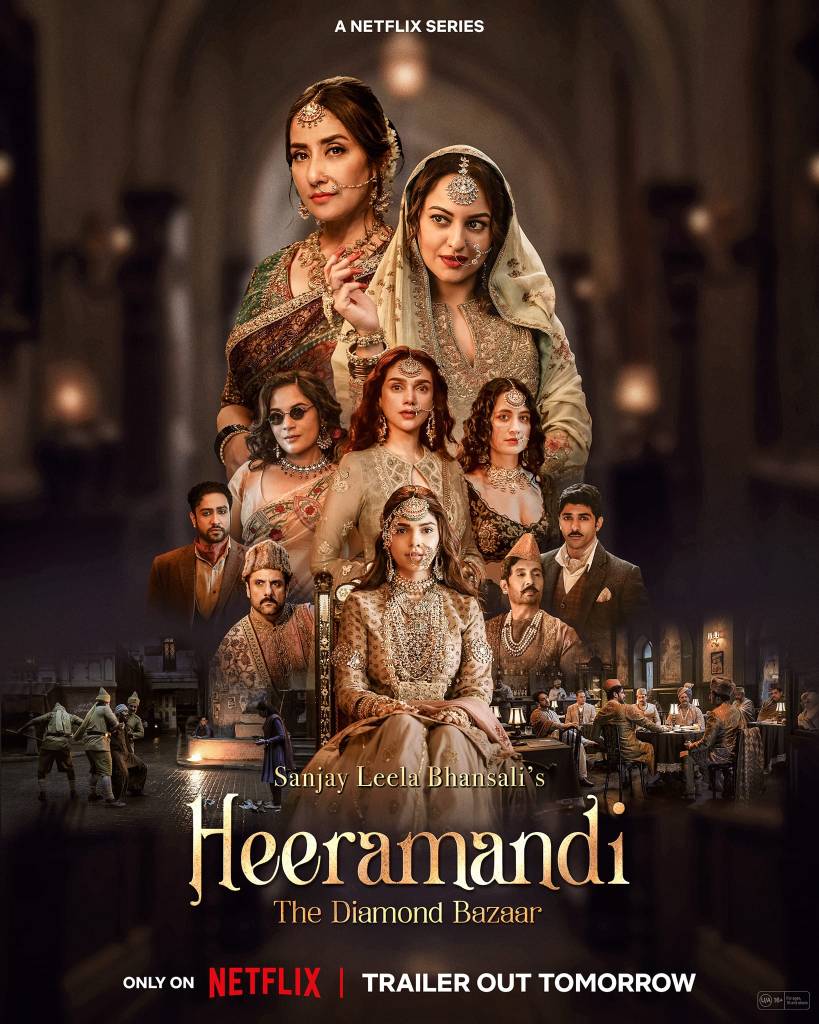
| Starring | Manisha Koirala Sonakshi Sinha Aditi Rao Hydari Richa Chadha Sanjeeda Sheikh Sharmin Segal |
| Music by | Songs: Sanjay Leela Bhansali Background Score: Benedict Taylor Naren Chandavarkar |
| Country of origin | India |
| Original language | Hindi |
| No. of episodes | 8 |
| Video | Codec: Streaming 4K Resolution: 2160p Aspect ratio: 2.39:1 |
| Audio | Urdu: Dolby Dolby Atmos |
| Subtitles | English |
Series Review:
“Heeramandi,” a series that marks the foray of the illustrious Sanjay Leela Bhansali into the digital streaming space, is a narrative tapestry woven with the threads of historical opulence and the poignant tales of courtesans in pre-Independence Lahore’s pleasure district. Bhansali’s directorial acumen is evident in every frame, with his signature grandiose sets and intricate costume designs, which serve as a visual homage to the era’s rich cultural tapestry.
The series delves into the intricate lives of the courtesans, who navigate a labyrinth of love, betrayal, and politics. It is set against the tumultuous backdrop of the 1940s, a time rife with socio-political upheaval, which is masterfully captured through the lens of these women’s lives. The narrative is a confluence of art and history, intertwining the elegance of Urdu poetry and the profoundness of Sufi philosophy, thus offering a glimpse into the intellectual milieu that shaped the subcontinent’s ethos.
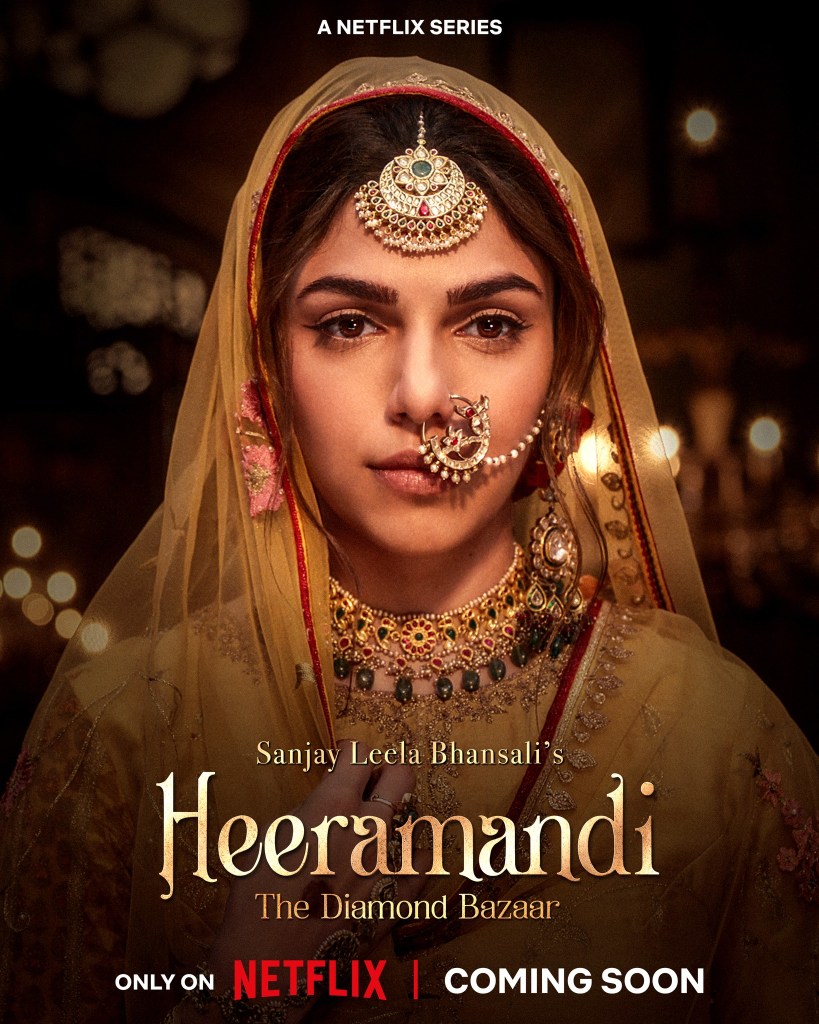
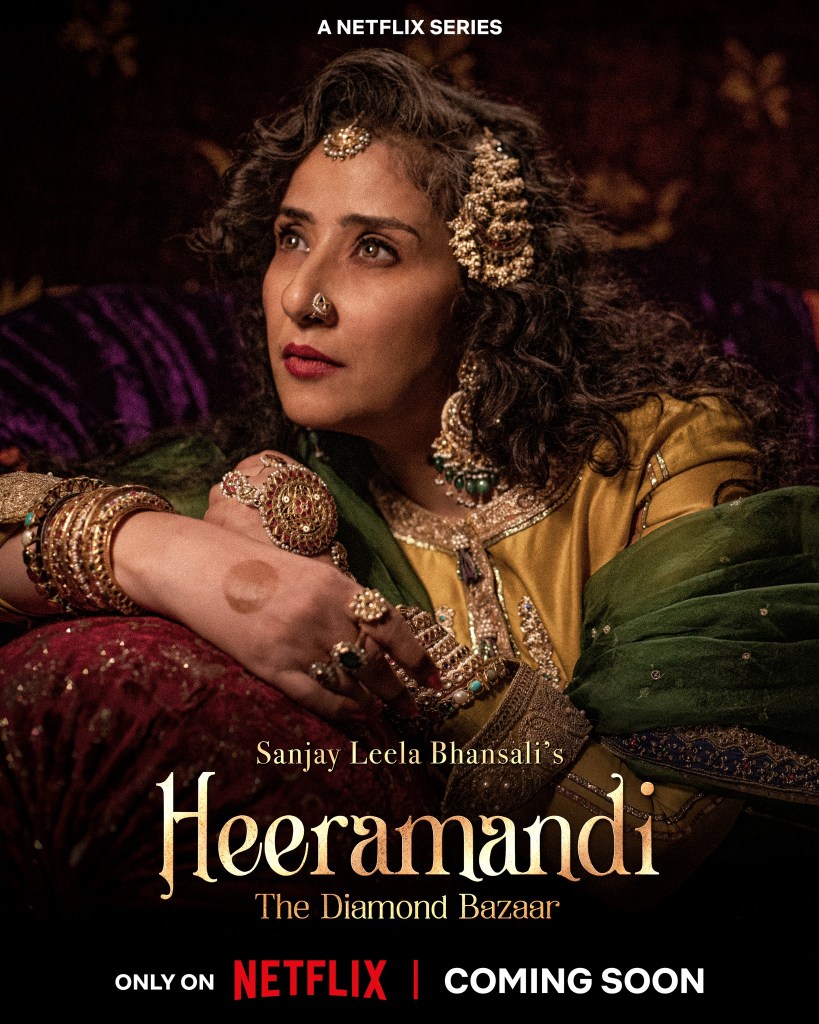
The ensemble cast, led by the venerable Manisha Koirala, Aditi Rao Hydari, Sonakshi Sinha, Richa Chadha, Sanjeeda Sheikh, and Sharmin Segal, brings to life the multifaceted personas of the denizens of Heera Mandi. Koirala, in her portrayal of Mallikajaan, the matriarch of Shahi Mahal, embodies a character whose layers are peeled back to reveal a core of steely resolve and vulnerability. Hydari’s Bibbo is a melange of grace and rebellion, her dulcet tones belaying the fervor of a revolutionary spirit.
While “Heeramandi” has garnered acclaim for its visual splendor and the depth of its performances, it has not been immune to critique. Some have pointed out a tendency towards melodramatic excess, which occasionally detracts from the narrative’s historical gravitas. However, these moments do not significantly mar the series’ overall impact.
A huge negative would be the actual narrative and pacing of each episode, which hampers the overall flow; as well as missed opportunities that fall flat within its opulence. A mystical lost world seeped in Tehzeeb and Tameez has been resurrected by Bhansali, and I am appreciative of this. One misses these socials that were numerous in earlier time. It brings back the nostalgia of older films like Mere Mehboob, Mere Huzoor and Mehboob Ki Mehndi. If at all, it shows the newer generation of watchers the sights and sounds of an era that has been long gone.
“Heeramandi” is a testament to Bhansali’s unerring ability to craft cinematic experiences that are as immersive as they are aesthetically pleasing. It is a series that transcends mere entertainment, inviting audiences to partake in a journey that is as much an exploration of a bygone era as it is a reflection on the timeless themes of love, power, and survival. The series stands as a beacon of Bhansali’s storytelling prowess, a narrative that is both grand and intimate, a spectacle that is as much about the spectacle as it is about the human condition. It is, ultimately, a series that not only captivates but also compels introspection on the epoch it portrays.
Picture Quality:
Heeramandi boasts a beautifully encoded 2160p 4K presentation that’s as crisp and technically striking as they come. Rich colours fill the screen at every turn. Vivid reds pop against deep, inky black shadows. Delineation reveals as much — or as little — as it’s meant to. Contrast is tuned perfectly, as well as frame flow.
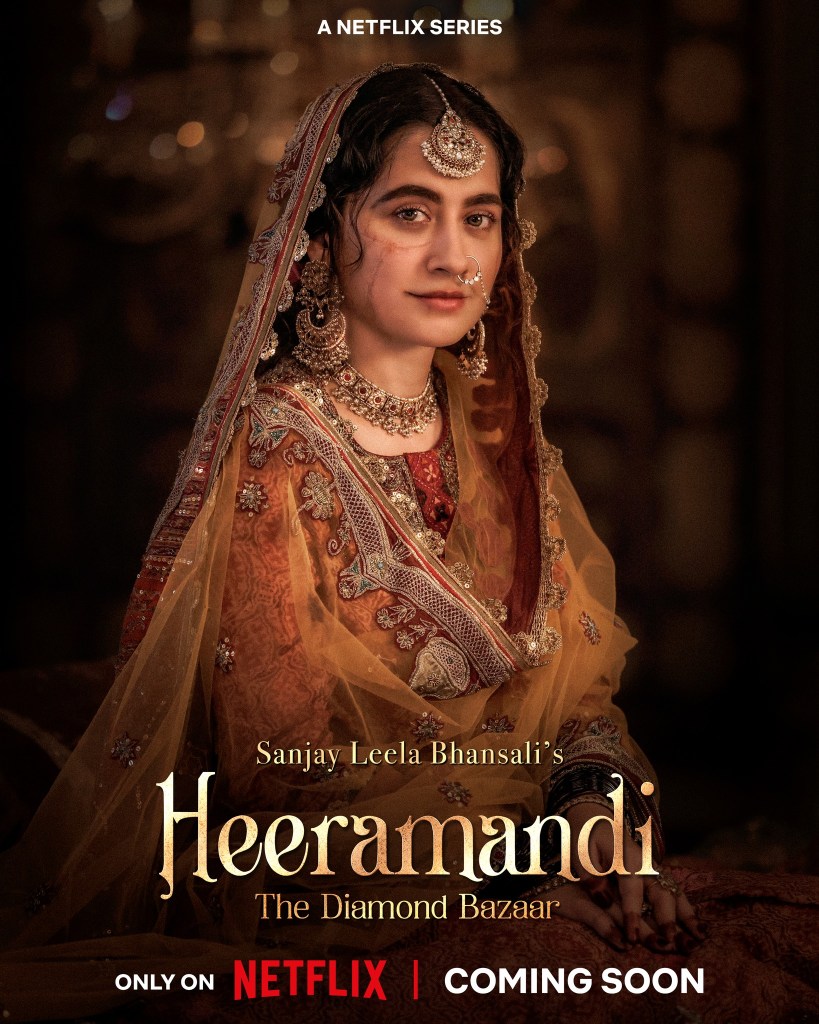
Heeramandi offers some extreme close-ups, which help to support fine detail levels, and as is usual with a Sanjay Leela Bhansali production, the symmetry, cohesion and splendour are all there in fine detail. Tasteful use of HDR enhancement through Dolby Vision highlights the work of Bhansali and his team. Stunning use of colour contrast especially for its characters gives it a truly unique appearance and the 4K presentation captures it perfectly.
Audio Quality:
Equally impressive is the default Dolby Atmos sound mix, if you have the Atmos capability on your systems. The music and background score in a Bhansali production is always of high quality and having a great soundstage to listen this always extends the overall experience.
The music especially in the on-screen performance rattles the speakers, and the rear Atmos activity is brilliant when listening to the audience Wah Wah’s. A special mention should be made about the LFE usage in the track Azadi where the Pakhawaj shines, it gives the Subwoofer a great workout. Heeramandi’s wide sound-stage boasts crystal-clear dialogue, thunderous LFE, and sweeping music cues that all work together to create a tangible, tantalizing world.
Rating
Series:  /
/
PQ: /
AQ: /
Screenshots:




Keep the Needle Dropping: Join the Conversation If you’re someone who believes that every crackle and pop on a vintage record tells a story, you’re in the right place. We are on a continuous mission to preserve the true sonic integrity of the Golden Era, one deep dive at a time. Don’t let the history of our music fade away—join our growing community of collectors, audiophiles, and history buffs by subscribing to @thegreatbollywoodparty868. Hit that notification bell to ensure you never miss our next investigation into the labels, tracks, and technical tales that defined Bollywood’s legendary sound. Let’s keep the vinyl spinning!

 The Great Bollywood Party