
In our last session, we discussed the “technical trickery” of the late 60s and early 70s—that thin, unbalanced sound known as Electronically Reprocessed Stereo. But thankfully, the era of deception was a bridge to something much more magnificent.
Today, we journey into the dawn of True Stereo on Indian vinyl. This was the moment the industry finally moved beyond splitting frequencies and adding fake echo, allowing us to hear the complex orchestrations of masters like Laxmikant-Pyarelal and R.D. Burman in full, panoramic glory.
The Pioneer: Jal Bin Machhli Nritya Bin Bijli (1971)
While the “Fake Stereo” machines were still humming in the background, a landmark moment occurred in 1971. The soundtrack for V. Shantaram’s Jal Bin Machhli Nritya Bin Bijli became the first Bollywood LP released with proper, true stereo sound.
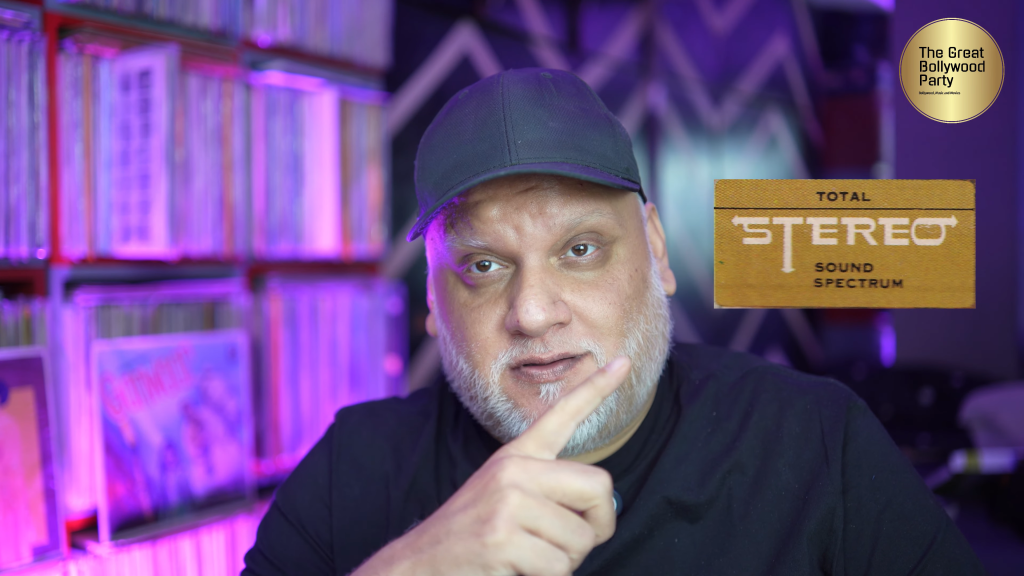
Composed by the legendary Laxmikant-Pyarelal, this record featured a special “Total Stereo Sound Spectrum” sticker. If you listen to it today on a high-end system, the stereo separation is so crisp you’ll wonder why the industry took so long to make the switch.
How to Identify “Real” Stereo
Just as the “D/” prefix warned us of reprocessed sound, the “S/” prefix became the hallmark of quality.
- The S/ Catalog Number: Look for codes like S/MOC on the label or spine. This indicates a true stereo master.
- The Shift in Labeling: By 1972, with the release of Dastaan, the “Total Stereo” stickers began to disappear as stereo became the natural standard.
The Sholay Phenomenon (1975)
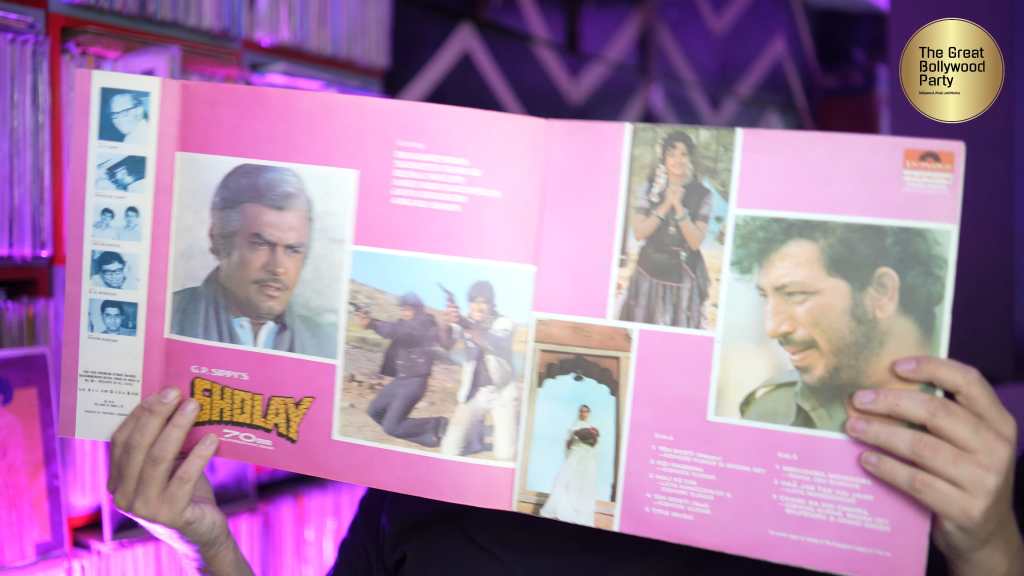
No discussion of Indian stereo is complete without the 1975 juggernaut Sholay. R.D. Burman’s score was released as a “Full Stereo” experience, featuring an iconic gatefold (or “tri-gatefold”) cover that housed the evergreen melodies.
Interestingly, the success was so massive that HMV even released the film’s dialogues on a stereo LP—a rare treat for those who wanted to hear Gabbar Singh’s menace in spatial detail.
The Curious Hybrid: Hum Kisise Kum Naheen(1972)
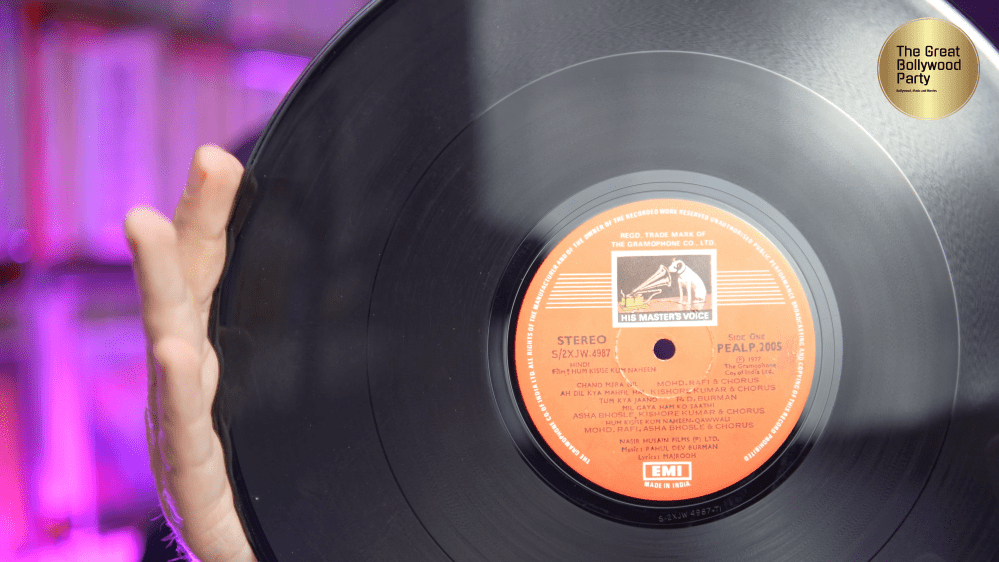
One of the most fascinating artifacts from this transition period is the Hum Kisise Kum Naheen LP. It features a stunning “booklet” style cover, but the real surprise is on the vinyl itself:
- Side One: Features the tracks in Full Stereo.
- Side Two: Receives the Mono treatment.
It’s a rare “split” experience where you can hear the transition of an era on a single piece of wax.
A 1955 Surprise: Jhanak Jhanak Payal Baje
Perhaps the most incredible story is that of the 1955 classic Jhanak Jhanak Payal Baje. Although the film was shot in 70mm with a stereo mix, it didn’t see an LP release until 1982. When it finally arrived, it was “Re-recorded Stereo,” but unlike the 70s “fake” versions, this was done with modern 1980s expertise, preserving the epic sound of V. Shantaram’s technical masterpiece beautifully.
Keep the Needle Dropping: Join the Conversation If you’re someone who believes that every crackle and pop on a vintage record tells a story, you’re in the right place. We are on a continuous mission to preserve the true sonic integrity of the Golden Era, one deep dive at a time. Don’t let the history of our music fade away—join our growing community of collectors, audiophiles, and history buffs by subscribing to @thegreatbollywoodparty868. Hit that notification bell to ensure you never miss our next investigation into the labels, tracks, and technical tales that defined Bollywood’s legendary sound. Let’s keep the vinyl spinning!
Did you know Hum Kisise Kum Naheen was a Stereo/Mono hybrid?
Which “True Stereo” LP in your collection has the best soundstage? Let us know in the comments!

 The Great Bollywood Party