
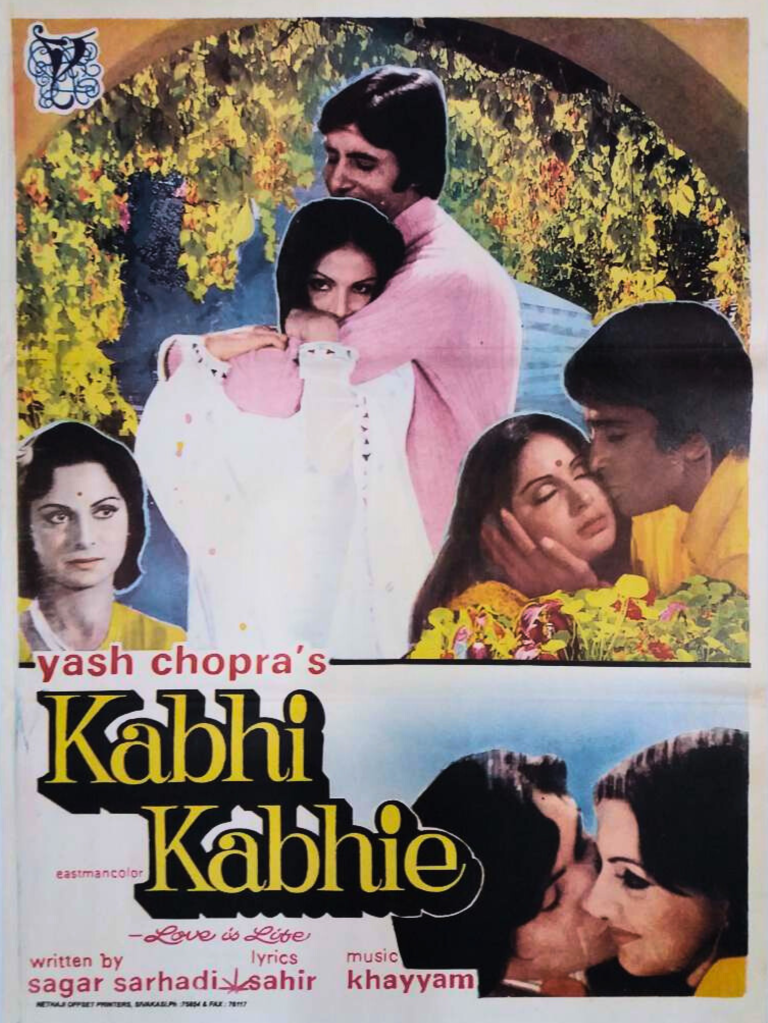
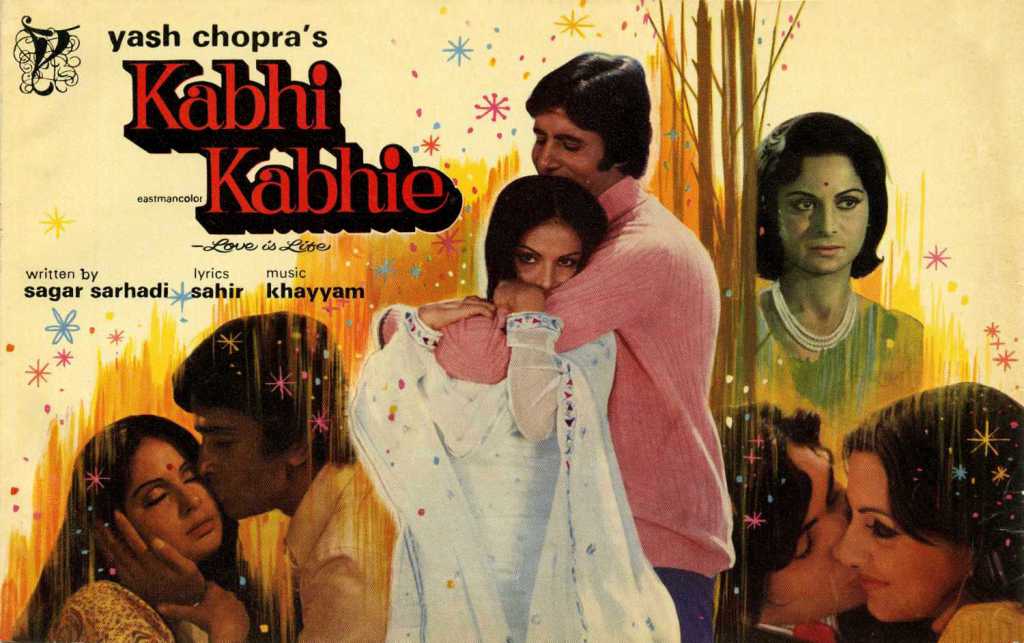
| Directed by | Yash Chopra |
|---|---|
| Screenplay by | Sagar Sarhadi |
| Story by | Pamela Chopra |
| Produced by | Yash Chopra |
| Starring | Waheeda Rehman Amitabh Bachchan Shashi Kapoor Raakhee Gulzar Rishi Kapoor Neetu Singh |
| Cinematography | Romesh Bhalla Kay Gee |
| Edited by | Naresh Malhotra Pran Mehra |
| Music by | Khayyam |
| Production company | Yash Raj Films |
| Distributed by | Yash Raj Films |
| Release date | 27 February 1976 |
| Running time | 178 minutes |
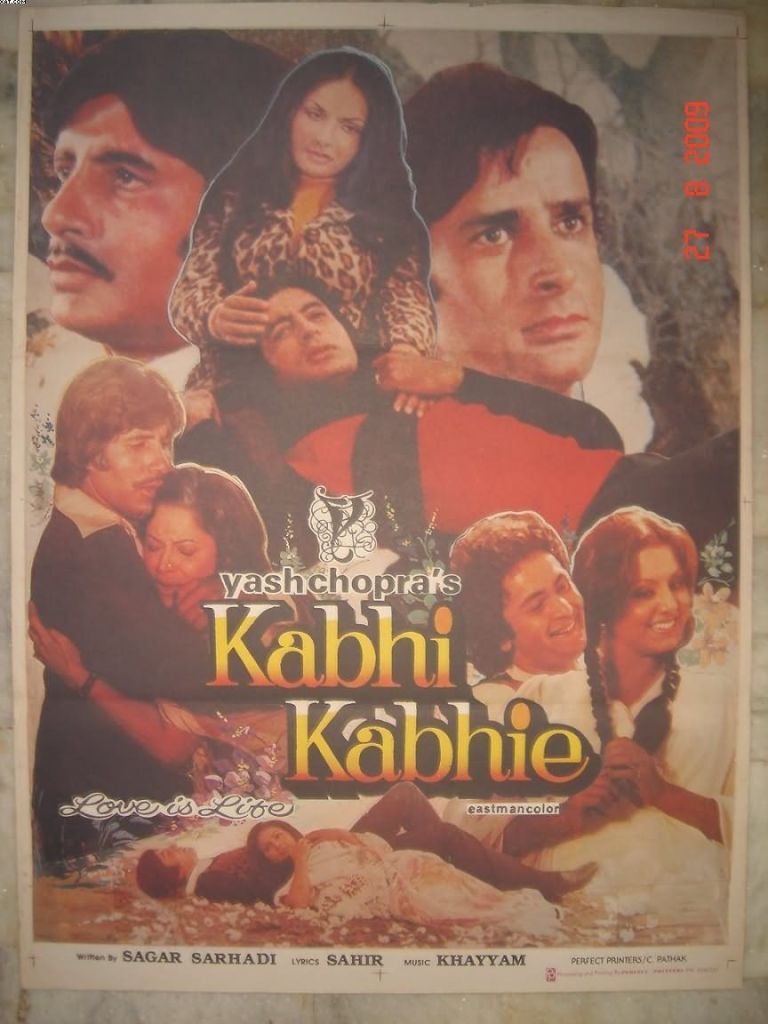
This year marks 50 years of Kabhi Kabhie—a film whose music created ripples across Bollywood and continues to echo through generations. Khayyam’s compositions bestowed upon it a richness of melody that remains unmatched, while Sahir Ludhianvi’s poetry intertwined seamlessly with those tunes, elevating them into timeless works of art. If one were to search for a soundtrack in the history of Hindi cinema where music and lyrics exist in perfect harmony, Kabhi Kabhie would undoubtedly stand at the forefront.
I have always held Khayyam in the highest regard, not only for the sweetness and distinctness of his melodies but for the soul he poured into every composition. His repertoire feels like a treasure chest—each song a gem that reveals his heart when deconstructed. With a flair for blending traditional Indian instruments into arrangements that resonated with the spirit of the times, Khayyam created music that was both rooted and contemporary. Kabhi Kabhie shines as the finest example of this artistry
As we revisit this golden soundtrack half a century later, Kabhi Kabhie still feels like more than just music—it is an emotional tapestry where melody and poetry breathe together. What follows is a closer look at how each song continues to enchant, inspire, and remind us why Khayyam and Sahir’s collaboration remains one of the finest in Bollywood’s musical history.
In my review of Razia Sultan, I noted Khayyam’s own recollection that his journey with Kabhi Kabhie began when Yash Chopra heard Aye Dil-E-Nadaan back in 1974. Impressed by its haunting beauty, Chopra entrusted Khayyam with the music of Kabhi Kabhie. Two years later, Khayyam crafted the soundtrack that would become a milestone in Hindi cinema—ironically released before Razia Sultan, despite the latter being conceived earlier. Time, in its curious way, reshaped destiny: while Kabhi Kabhie reached audiences swiftly and etched itself into history, Razia Sultan endured a prolonged gestation of nearly fifteen years before completion. This contrast underscores how circumstance and timing often determine the legacy of art, with Kabhi Kabhie benefiting from its moment of arrival.
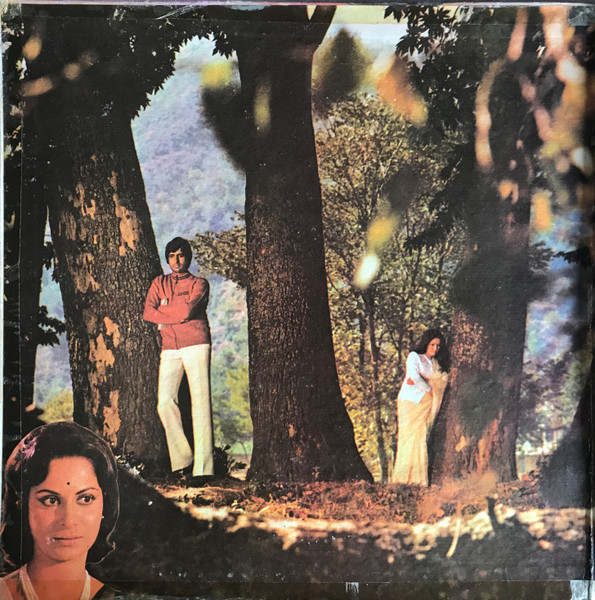
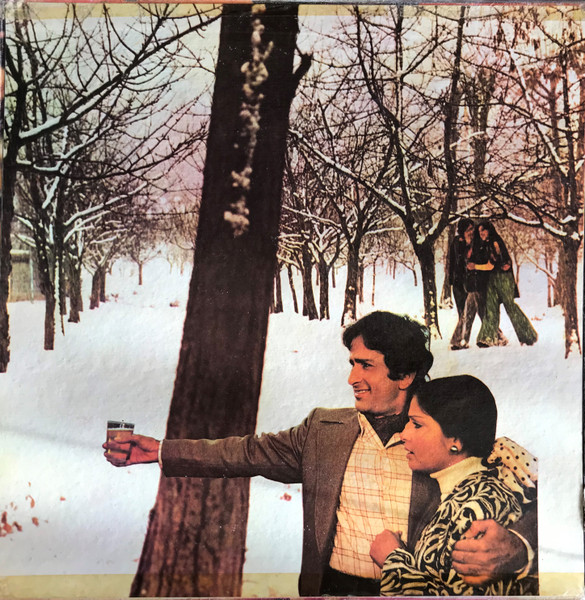
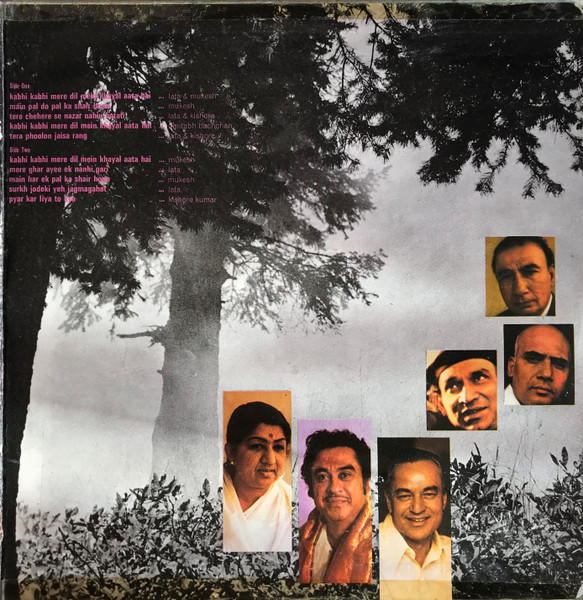
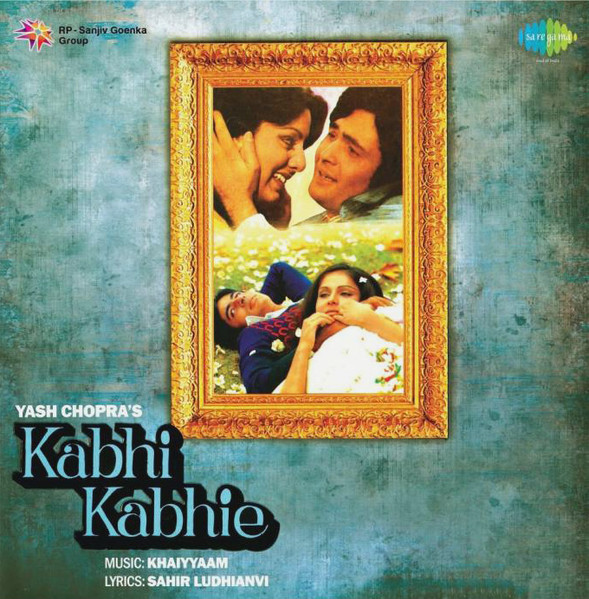
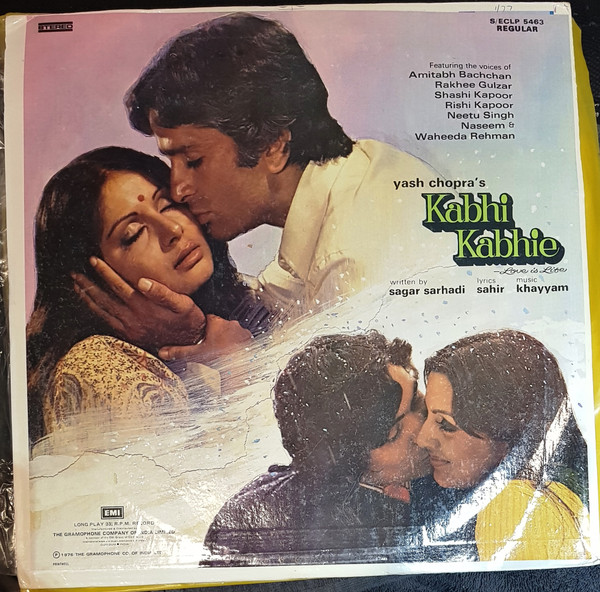
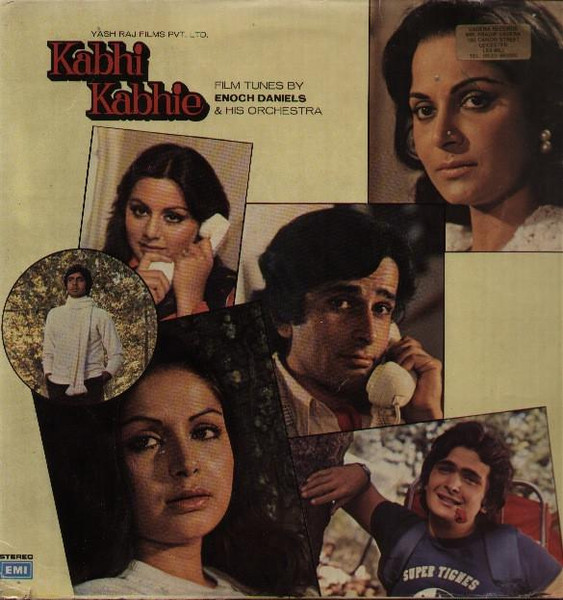
The original vinyl release of Kabhi Kabhie in 1976 was launched with great fanfare, marking a milestone for HMV as it introduced its first-ever tri-fold cover on the iconic red dog label (catalogue number ECLP 5484). The soundtrack immediately captured the public’s imagination, becoming the best-selling album of the year and setting new standards for Bollywood music presentation.
Its impact was profound: the album not only revived Khayyam’s career but also crystallized what would later be celebrated as the “Yash Chopra sound.” Within its first year, Kabhi Kabhie achieved Platinum status—in the mid-1970s Indian market, this meant sales exceeding 100,000 units, an extraordinary feat given the prestige and expense of vinyl records at the time.
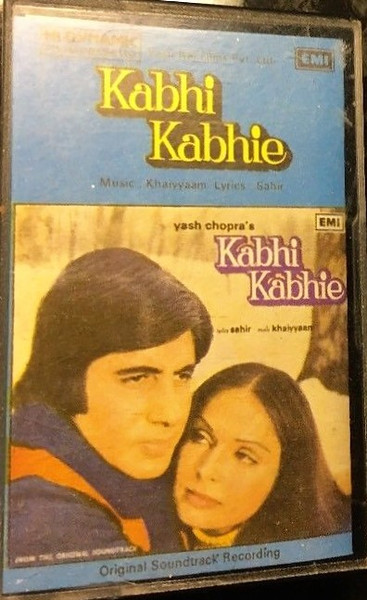
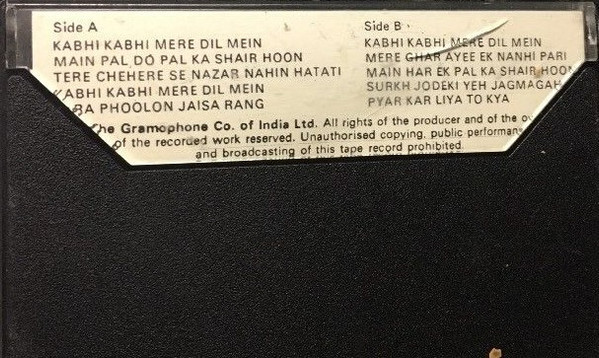
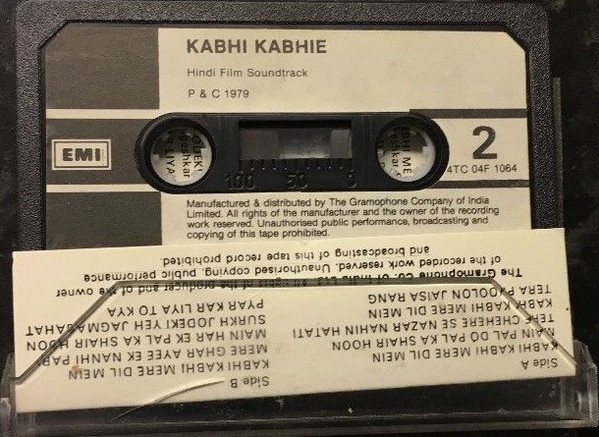
Industry retrospectives estimate that across formats—vinyl, cassette, and later CD—the soundtrack sold between 1 to 2 million units. Much of this success was driven by the cassette revolution of the late 1970s and 1980s. While the LP was the prestige format in 1976, it was HMV’s cassette releases that carried the music into homes across India, fueling the album’s enduring popularity.
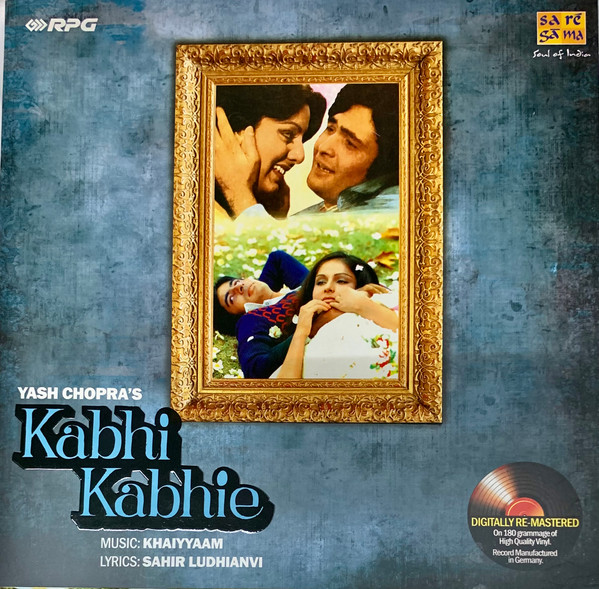
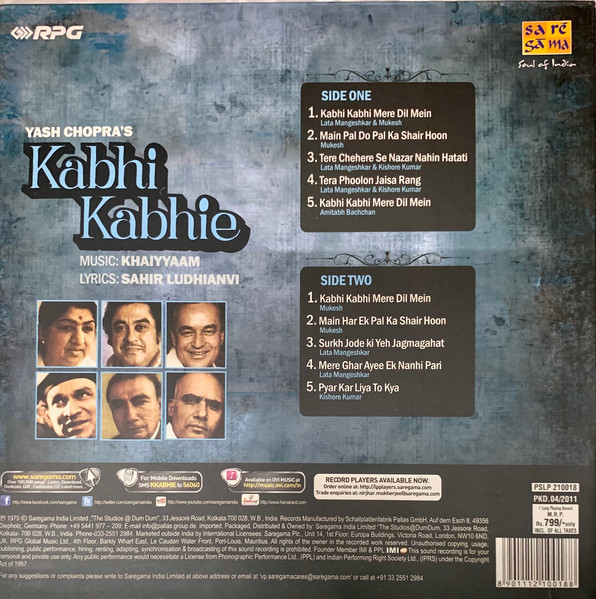
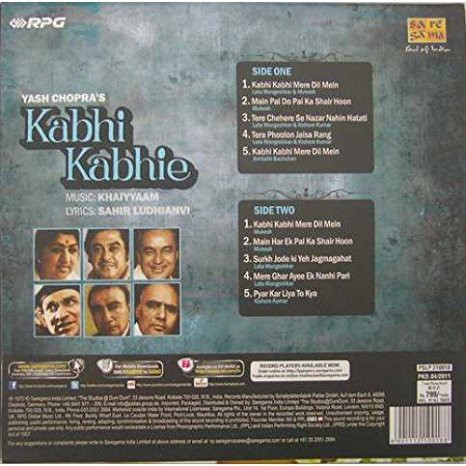
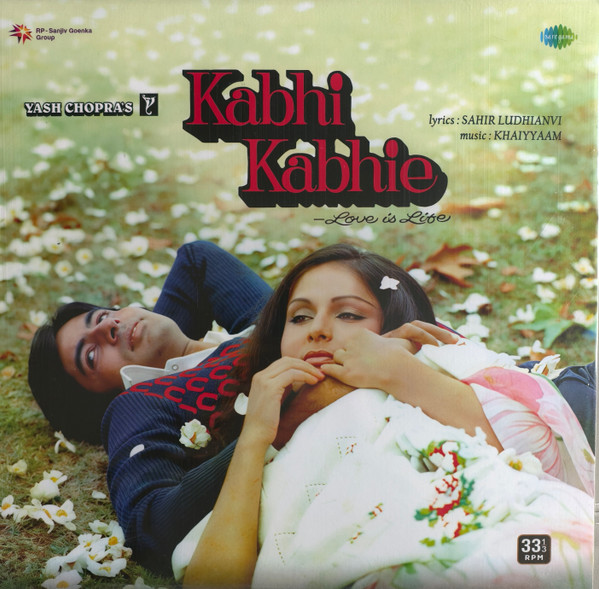
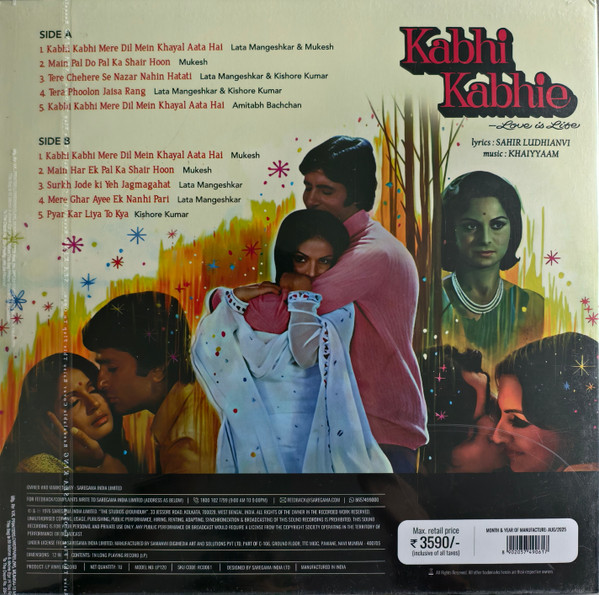
The soundtrack’s legacy has been reaffirmed through multiple reissues, including vinyl pressings in 2011, 2016, and 2025, ensuring that new generations continue to experience the magic of Khayyam and Sahir Ludhianvi’s collaboration in its original physical form.
The OG Vinyl Release:
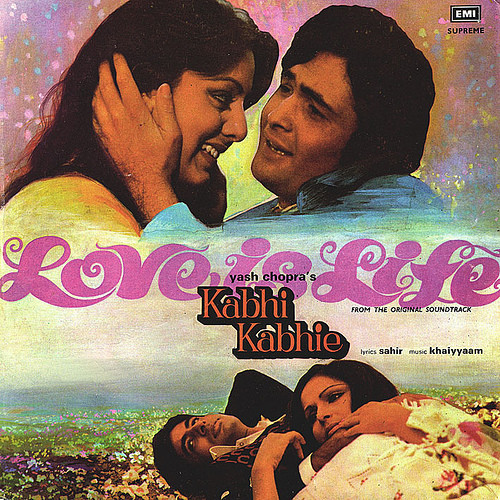
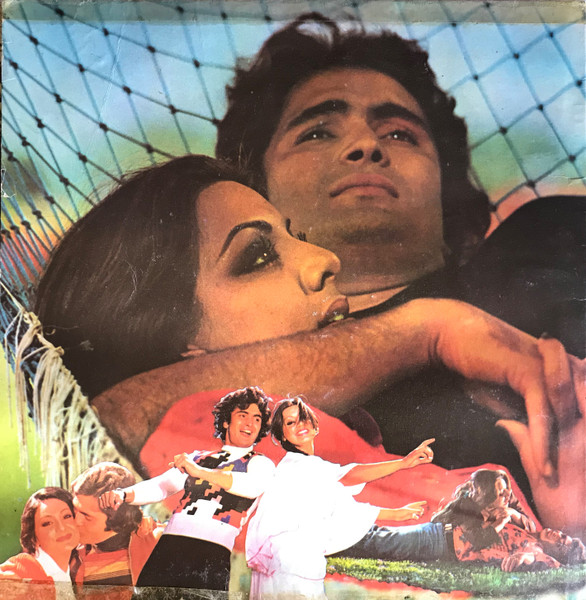
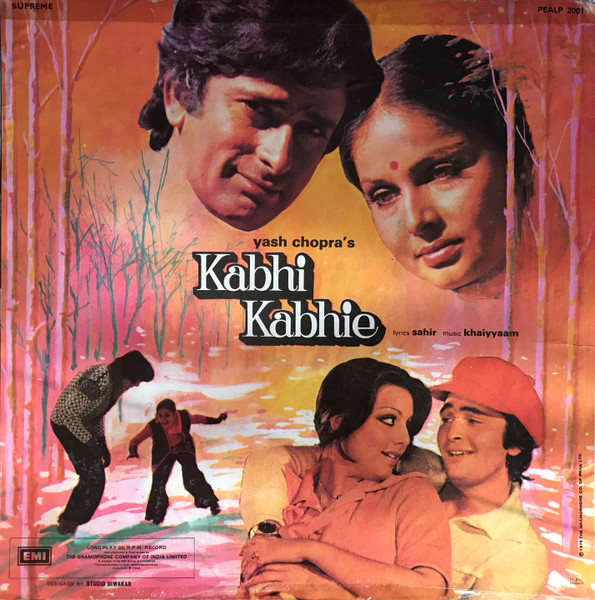
The OG Cassette release:
Later Vinyl Pressings:
Tracklist:
| No. | Title | Artist | Length |
| 1 | Kabhi Kabhie Mere Dil Mein – Dialogues | Amitabh Bachchan | 00:01:03 |
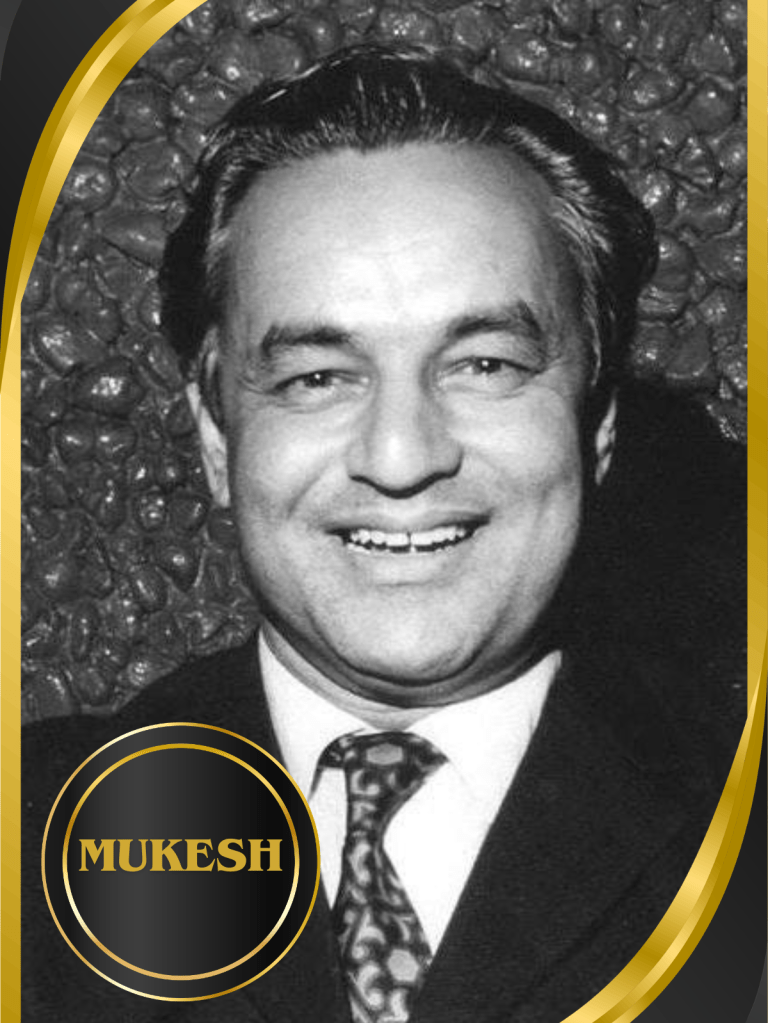
| 2 | Kabhi Kabhie Mere Dil Mein – Solo | Mukesh | 00:04:45 |
| 3 | Kabhi Kabhie Mere Dil Mein – Duet | Mukesh & Lata Mangeshkar | 00:02:33 |
| 4 | Main Pal Do Pal Ka Shair Hoon | Mukesh | 00:03:20 |
| 5 | Main Har Ek Pal Ka Shair Hoon | Mukesh | 00:03:05 |
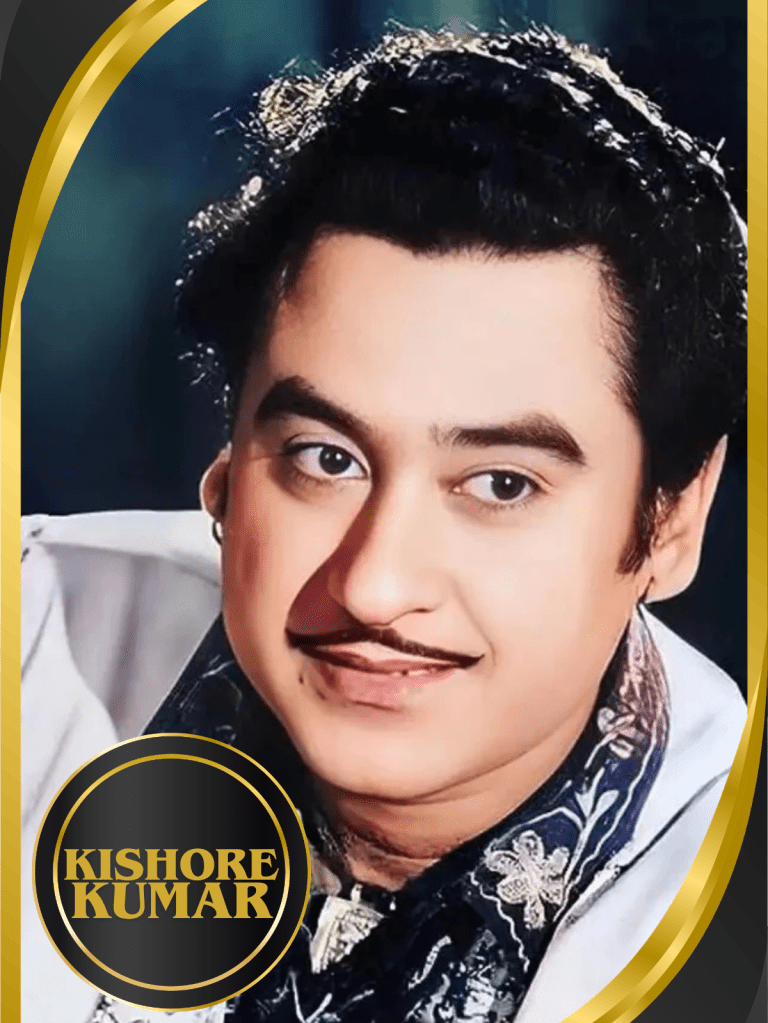
| 6 | Tere Chehre Se Nazar Hatati | Kishore Kumar & Lata Mangeshkar | 00:05:03 |
| 7 | Tera Phoolon Jaisa Rang | Kishore Kumar & Lata Mangeshkar | 00:06:13 |
| 8 | Mere Ghar Ayee Ek Nanhi Pari | Lata Mangeshkar | 00:03:18 |
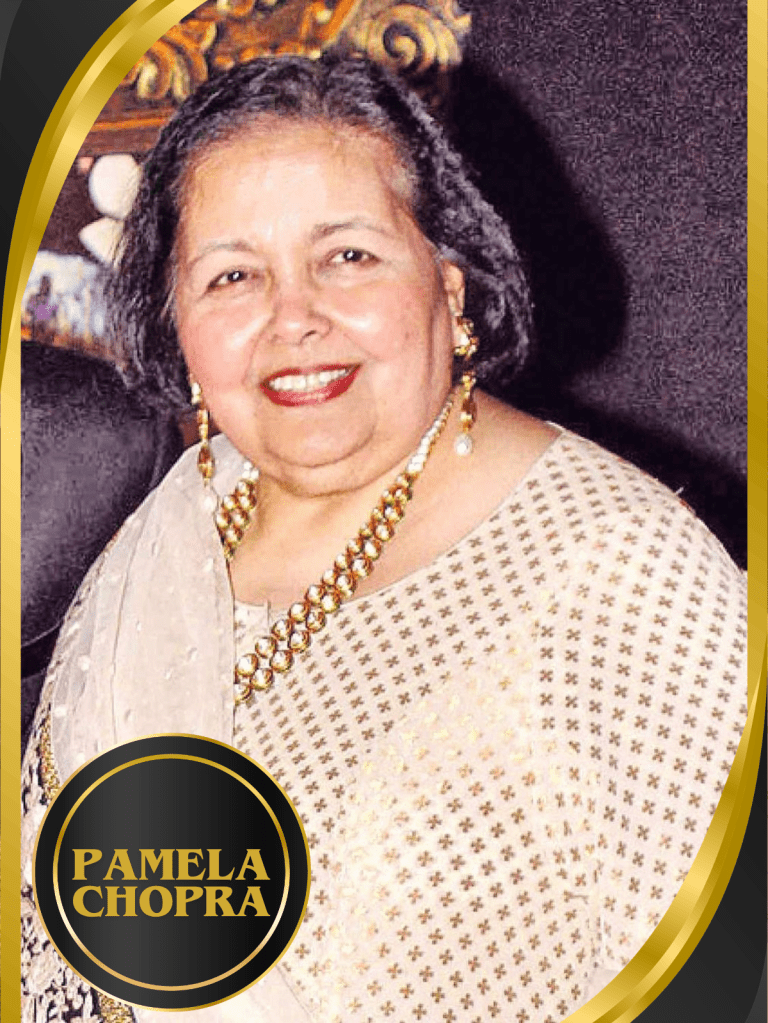
| 9 | Surkh Jodegi Yeh Jagmagahat | Lata Mangeshkar & Pamela Chopra | 00:03:45 |
| 10 | Pyar Kar Liya To Kya | Kishore Kumar | 00:03:41 |
| Total Length | 00:39:52 | ||

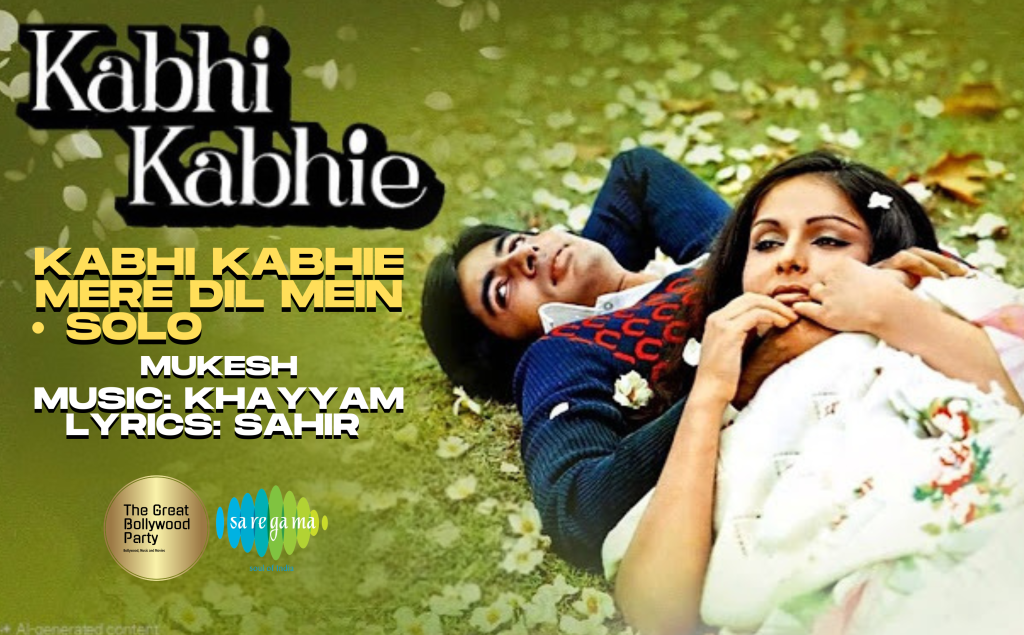
Few songs in Bollywood history are remembered as deeply for their romantic lyricism as the title track of Kabhi Kabhie. Appearing in three distinct versions throughout the film, each rendition carries its own context and emotional complexity. The solo Mukesh version opens the film in a nostalgic flashback, establishing the past love story of Amit and Pooja. Here, the song becomes a tender expression of unrequited love and memory, contrasting with the later, more melancholic reprise.
This first version, however, is by far the most joyous. It brims with the promise of love—vigorous, youthful, and full of ardor. Amit and Pooja quietly reflect on their bond through Sahir Ludhianvi’s metaphors of splendor, words that feel almost celestial when paired with Khayyam’s composition in Raag Pahadi. Mukesh’s voice, with its unique warmth and conviction, elevates the melody into one of his most celebrated performances.
Raag Pahadi, a light folk-based Hindustani raga originating from the Himalayan region, literally means “of the mountains.” Its flowing, serene character evokes romance, nostalgia, and tranquility—often likened to the gentle stream of a mountain valley. Khayyam’s choice of this raga was inspired, perfectly aligning with Sahir’s lyric and Yash Chopra’s cinematic sensibility.
Mukesh, often underrated in discussions of playback legends, proves here to be a powerhouse of emotion. His rendition of this Pahadi-infused melody is so heartfelt that it has remained etched in the collective memory of listeners for decades. Yash Chopra’s instinct to pair Mukesh’s voice with Sahir’s magnificent lyric was masterful, ensuring that the song would forever symbolize the essence of Bollywood romance.
Kabhi Kabhi Mere Dil Mein Khayal Aata Hain
Sometimes, In My Heart A Feeling Emerges
Kabhi Kabhi Mere Dil Mein Khayal Aata Hain
Sometimes, In My Heart A Feeling Emerges
Ke Jaise Tujhko Banaaya Gaya Hain Mere Liye
That You Have Been Created Just For Me
Ke Jaise Tujhko Banaaya Gaya Hain Mere Liye
That You Have Been Created Just For Me
Tu Abse Pehle Sitaaron Mein Bas Rahi Thi Kahin
Once, You Dwelled Among The Stars—Far Beyond The Reach Of Earthly Bounds
Tu Abse Pehle Sitaaron Mein Bas Rahi Thi Kahin
Once, You Dwelled Among The Stars—Far Beyond The Reach Of Earthly Bounds
Tujhe Zameen Pe Bulaaya Gaya Hain Mere Liye
And Now, You Have Descended From The Heavens, Called Down To Earth As If Only For Me
Tujhe Zameen Pe Bulaaya Gaya Hain Mere Liye
And Now, You Have Descended From The Heavens, Called Down To Earth As If Only For Me
Kabhi Kabhie Mere Dil Mein Khayal Aata Hain
Sometimes, In My Heart A Feeling Emerges
Ke Ye Badan, Ye Nigaahen, Meri Amaanat Hain
That This Body, These Eyes, Are Mine To Treasure
Ke Ye Badan, Ye Nigaahen, Meri Amaanat Hain
That This Body, These Eyes, Are Mine To Treasure
Ye Gesuoon Ki Ghani Chhaaon Hain Meri Khaatir
As If The Shade Beneath These Tresses Is Meant For Me
Ye Honth Aur Ye Baahen Meri Amaanat Hain
And These Lips And These Arms Are Mine To Treasure
Ye Honth Aur Ye Baahen Meri Amaanat Hain
And These Lips And These Arms Are Mine To Treasure
Kabhi Kabhi Mere Dil Mein Khayal Aata Hain
Sometimes, In My Heart A Feeling Emerges
Ke Jaise Bajti Hain Shehnaaiyan Si Raahon Mein
That It Seems Like Wedding Trumpeting Are Singing Around Us.
Ke Jaise Bajti Hain Shehnaaiyan Si Raahon Mein
That It Seems Like Wedding Trumpeting Are Singing Around Us.
Suhaag Raat Hain Ghunghat Uthaa Raha Hoon Main
As If It’s Our Wedding Night And I’m Lifting Your Veil
Suhaag Raat Hain Ghunghat Uthaa Raha Hoon Main
As If It’s Our Wedding Night And I’m Lifting Your Veil
Simat Rahi Hain Tu Sharmaa Ke Apni Baahon Mein
And You Are Shyly Surrendering Yourself In My Embrace
Simat Rahi Hain Tu Sharmaa Ke Apni Baahon Mein
And You Are Shyly Surrendering Yourself In My Embrace
Kabhi Kabhi Mere Dil Mein Khayal Aata Hain
Sometimes, In My Heart A Feeling Emerges
Ke Jaise Tu Mujhe Chaahengi Umra Bhar Yunhi
That It’s Like You Will Love Me Forever Like This
Utthegi Meri Taraf Pyar Ki Nazar Yunhi
That In My Direction, This Loving Gaze Will Always Look Up Like This
Main Jaanta Hoon Ke Tu Gair Hai, Magar Yunhi
I Know That You Are Not Meant For Me, But Still, Just Like This My Heart Yearns
Main Jaanta Hoon Ke Tu Gair Hai, Magar Yunhi
I Know That You Are Not Meant For Me, But Still, Just Like This My Heart Yearns
Kabhi Kabhi Mere Dil Mein Khayal Aata Hain…
Sometimes, In My Heart A Feeling Emerges…


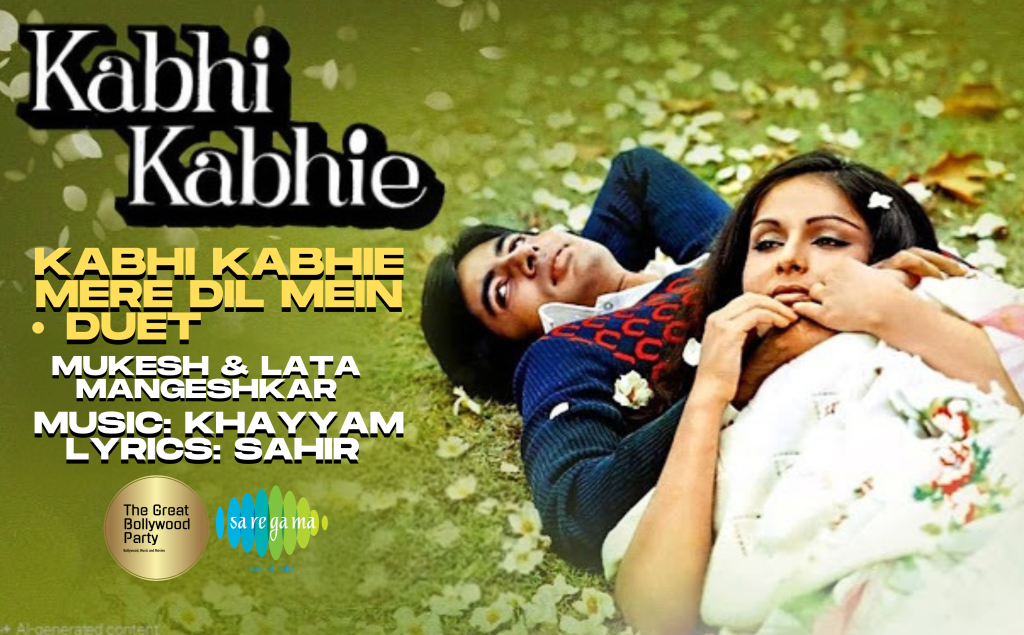
The duet version of Kabhi Kabhie Mere Dil Mein is far more sombre and grounded than the opening solo. While the first rendition brims with youthful promise, this one reflects the reality of love denied by destiny. Amit and Pooja may have fallen deeply in love, but fate has other plans. In one of the film’s most poignant moments, Vijay—unaware of the song’s true origins—asks his bride Pooja to recite the famous poem on their wedding night, not knowing that its author, Amit, is the very man who still holds her heart.
Unlike the solo version, which embodies fulfilled romance, the duet becomes a vessel of solitary yearning—a love remembered rather than lived. Lata Mangeshkar’s ethereal voice intertwines with Mukesh’s warmth, creating a dialogue that feels tender yet tinged with melancholy. Sahir Ludhianvi’s lyrics shift in tone here, moving away from the joy of companionship toward the ache of longing and memory.
Khayyam’s orchestration mirrors this emotional complexity. It is richer and more layered than the solo version, yet restrained enough to let the rawness of the situation shine through. The music underscores the maturity of the moment, capturing both the beauty of love and the inevitability of its loss.
Although the lyrics remain identical to the solo version, the duet transforms their meaning entirely. The interplay between male and female voices introduces a duality: the male portions reflect the dream of love, filled with hope and desire, while the female portions embody the reality of circumstance, shaded with resignation and memory. This contrast deepens the emotional impact, turning the song into a dialogue between aspiration and truth.
Lata Mangeshkar’s presence is pivotal. Her ethereal voice does not merely accompany Mukesh—it elevates the composition, adding layers of poignancy and grace. Together, their voices weave a tapestry of longing and reflection, proving that even with unchanged lyrics, the shift in perspective can alter the emotional landscape of a song. Khayyam’s brilliance lies in recognizing this dynamic, allowing the duet to stand as a more sombre, mature counterpart to the solo version.
Kabhi Kabhi Mere Dil Mein Khayal Aata Hain
Sometimes, In My Heart A Feeling Emerges
Kabhi Kabhi Mere Dil Mein Khayal Aata Hain
Sometimes, In My Heart A Feeling Emerges
Ke Jaise Tujhko Banaaya Gaya Hain Mere Liye
That You Have Been Created Just For Me
Ke Jaise Tujhko Banaaya Gaya Hain Mere Liye
That You Have Been Created Just For Me
Tu Abse Pehle Sitaaron Mein Bas Rahi Thi Kahin
Once, You Dwelled Among The Stars—Far Beyond The Reach Of Earthly Bounds
Tu Abse Pehle Sitaaron Mein Bas Rahi Thi Kahin
Once, You Dwelled Among The Stars—Far Beyond The Reach Of Earthly Bounds
Tujhe Zameen Pe Bulaaya Gaya Hain Mere Liye
And Now, You Have Descended From The Heavens, Called Down To Earth As If Only For Me
Tujhe Zameen Pe Bulaaya Gaya Hain Mere Liye
And Now, You Have Descended From The Heavens, Called Down To Earth As If Only For Me
Kabhi Kabhie Mere Dil Mein Khayal Aata Hain
Sometimes, In My Heart A Feeling Emerges
Ke Ye Badan, Ye Nigaahen, Meri Amaanat Hain
That This Body, These Eyes, Are Mine To Treasure
Ke Ye Badan, Ye Nigaahen, Meri Amaanat Hain
That This Body, These Eyes, Are Mine To Treasure
Ye Gesuoon Ki Ghani Chhaaon Hain Meri Khaatir
As If The Shade Beneath These Tresses Is Meant For Me
Ye Honth Aur Ye Baahen Meri Amaanat Hain
And These Lips And These Arms Are Mine To Treasure
Ye Honth Aur Ye Baahen Meri Amaanat Hain
And These Lips And These Arms Are Mine To Treasure
Kabhi Kabhi Mere Dil Mein Khayal Aata Hain
Sometimes, In My Heart A Feeling Emerges
Ke Jaise Bajti Hain Shehnaaiyan Si Raahon Mein
That It Seems Like Wedding Trumpeting Are Singing Around Us.
Ke Jaise Bajti Hain Shehnaaiyan Si Raahon Mein
That It Seems Like Wedding Trumpeting Are Singing Around Us.
Suhaag Raat Hain Ghunghat Uthaa Raha Hoon Main
As If It’s Our Wedding Night And I’m Lifting Your Veil
Suhaag Raat Hain Ghunghat Uthaa Raha Hoon Main
As If It’s Our Wedding Night And I’m Lifting Your Veil
Simat Rahi Hain Tu Sharmaa Ke Apni Baahon Mein
And You Are Shyly Surrendering Yourself In My Embrace
Simat Rahi Hain Tu Sharmaa Ke Apni Baahon Mein
And You Are Shyly Surrendering Yourself In My Embrace
Kabhi Kabhi Mere Dil Mein Khayal Aata Hain
Sometimes, In My Heart A Feeling Emerges
Ke Jaise Tu Mujhe Chaahengi Umra Bhar Yunhi
That It’s Like You Will Love Me Forever Like This
Utthegi Meri Taraf Pyar Ki Nazar Yunhi
That In My Direction, This Loving Gaze Will Always Look Up Like This
Main Jaanta Hoon Ke Tu Gair Hai, Magar Yunhi
I Know That You Are Not Meant For Me, But Still, Just Like This My Heart Yearns
Main Jaanta Hoon Ke Tu Gair Hai, Magar Yunhi
I Know That You Are Not Meant For Me, But Still, Just Like This My Heart Yearns
Kabhi Kabhi Mere Dil Mein Khayal Aata Hain…
Sometimes, In My Heart A Feeling Emerges…

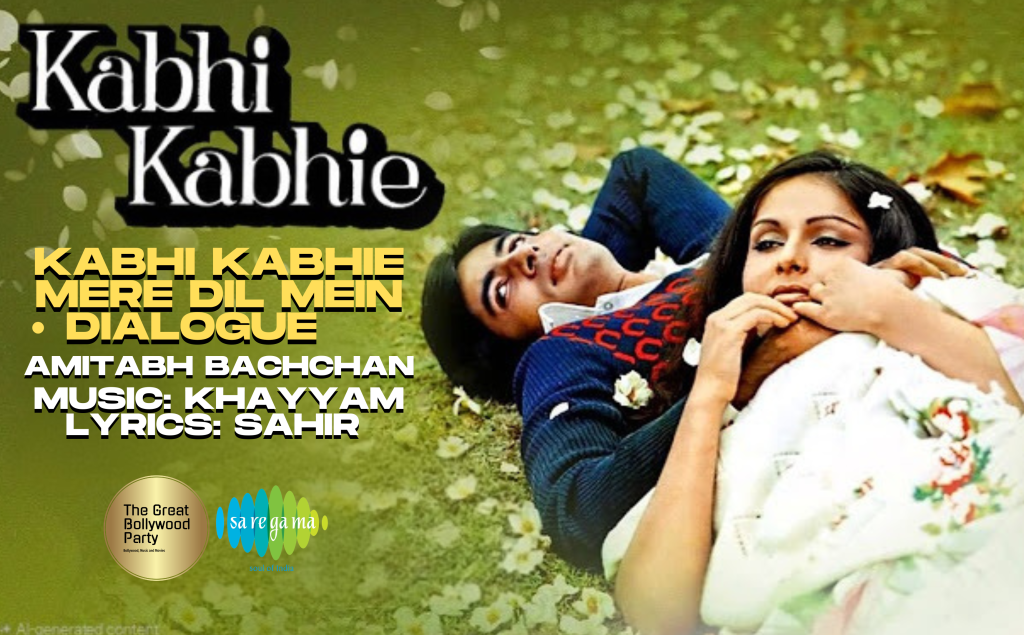
In an unfateful twist later in the film, Pooja interviews the now-quiet and settled poet Amit. Their conversation inevitably stirs echoes of their past, and in a moment heavy with memory, Pooja asks him to recite a poem. This becomes the final version of the title lyric, delivered not in song but in Amitabh Bachchan’s inimitable baritone. His voice carries the weight of acceptance—resigned to fate, yet tinged with a sweet bitterness that makes the moment unforgettable.
Here, Sahir Ludhianvi’s words shift in tone. No longer the metaphors of youthful promise or the duet’s bittersweet longing, the lyric now reflects Amit’s deep pain and quiet loss. It is poetry stripped of illusion, spoken with the gravity of lived experience. Khayyam’s composition recedes into the background, allowing the sheer power of Sahir’s verse and Bachchan’s voice to dominate.
This final rendition transforms the song into a meditation on destiny. It is not about love fulfilled or remembered—it is about love accepted, with all its sorrow and inevitability. In this way, the title track completes its journey across the film, evolving from dream, to memory, to resignation.
Kabhi Kabhi Mere Dil Main Khayal Aata Hain
Sometimes, In My Heart A Feeling Emerges
Ki Zindagi Teri Zulfon Ki Narm Chhaon Main Guzarne Pati
If I Have Lived under the Shadow of Your Hair
To Sadab Ho Bhi Sakti Thi
It Would Have Been More Peaceful
Yeh Ranjho Gham Ki Siyahi Jo Dil Pe Chhayi Hain
The Ink Of Pain And Sorrow On My Heart
Teri Nazar Ki Suahon Main Kho Bhi Sakti Thi
Could’ve Been Lost In Your Eyes
Magar Yeh Ho Na Saka,
But It Didn’t Happen
Magar Yeh Ho Na Saka Aur Ab Ye Aalam Hain
But It Didn’t Happen, Now Life Is On Verge
Ki Tu Nahin, Tera Gham, Teri Joostjoo Bhi Nahin
That I Don’t Have You Nor Sorrow Neither Hopes
Guzar Rahi Hain Kuchh Iss Tarah Zindagi Jaise,
Life is passing, like that is anyway to live life.
Isse Kisi Ke Sahare Ki Aarzoo Bhi Nahin
Living Life Without Any Support/Landing Hand
Na Koi Raah, Na Manzil, Na Roshni Ka Suragh
No Road, No Goal, Nor Way To See Light
Bhatak Rahin Hai Andheron Main Zindagi Meri
My Life Is Traveling In Darkness
Inhi Andheron Main Reh Jaoonga Kabhi Kho Kar
I’m To Be Lost In Darkness Someday
Main Janta Hoo Meri Hum-Nafas, Magar Yoonhi
I Know It’s My Love Of Life, But
Kabhi Kabhi Mere Dil Main Khayal Aata Hai
Sometimes, In My Heart A Feeling Emerges
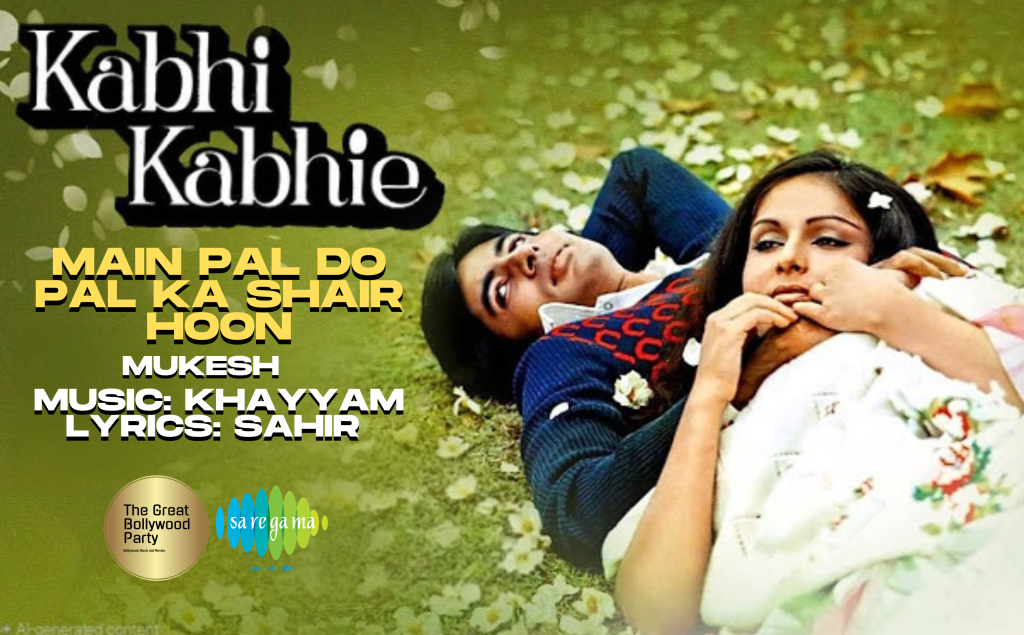
In Kabhi Kabhie , this song appears first, introducing Amit, as a young, idealistic poet at a gathering. His recitation emphasizes that his youth, his art, and even his legacy are but temporary—“pal do pal” (a moment or two). This context is crucial: it establishes Amit’s humble view of his own impact on the world, while foreshadowing the transience of his romance with Pooja.
Mukesh croons the ghazal Main Pal Do Pal Ka Shair Hoon with precision and magnificence, his voice carrying both fragility and conviction. Khayyam’s restrained composition allows the emotion in Mukesh’s timbre to shine, epitomizing the beauty of this song. Sahir Ludhianvi’s flawless lyrics sway our thoughts from the personal to the universal, reminding us of the fleeting nature of existence and the impermanence of fame, love, and legacy. Mukesh’s delivery is understated yet deeply moving, making the song less about vocal flourish and more about emotional truth. Listening today, one cannot help but feel humbled by its message: that even the briefest of moments can hold eternal beauty.
As Nitin Pathak’s insightful analysis notes, Sahir’s metaphor of the poet’s fleeting relevance is not just about art—it is about life itself. The song becomes a philosophical statement, urging us to reflect on mortality and the passing nature of human relationships. Khayyam’s choice to keep the arrangement minimal was deliberate; the melody is simple, almost meditative, ensuring that Sahir’s verse and Mukesh’s voice dominate.
Main Pal Do Pal Ka Shayar Hoon
I Am A Poet For A Moment Or Two
Pal Do Pal Meri Kahani Hai
A Moment Or Two Is My Story
Pal Do Pal Meri Hasti Hai
A Moment Or Two Is My Existence
Pal Do Pal Meri Jawani Hai
A Moment Or Two Is My Youth
Kal Aur Aayenge Nagmon Ki
Others Will Come Tomorrow, To Pick
Khilti Kaliyan Chunne Wale
The Blooming Buds Of Songs
Mujhse Behtar Kehne Wale
Those Who Will Recite Better Than Me
Tumse Behtar Sunne Wale
Those Who Will Listen Better Than You
Kal Koi Mujhko Yaad Kare
Why Should Someone Remember Me Tomorrow?
Kyun Koi Mujhko Yaad Kare
Why Should Anyone Remember Me?
Masroof Zamana Mere Liye
The World Is Busy, Why Should It
Kyun Waqt Apna Barbaad Kare
Waste Its Time For Me?
Mujhse Pehle Kitne Shayar Aaye
So Many Poets Came Before Me
Aur Aakar Chale Gaye
And Came And Went Away
Kuch Aanhein Bhar Kar Laut Gaye
Some Returned With Sighs Of Sorrow
Kuch Nagmein Gaakar Chale Gaye
Some Left After Singing Their Songs
Wo Bhi Ek Pal Ka Kissa The
They Were Also A Story Of A Moment
Main Bhi Ek Pal Ka Kissa Hoon
I Am Also A Story Of A Moment
Kal Tumse Juda Ho Jaunga
Tomorrow I Will Be Separated From You
Wo Aaj Tumhara Hissa Hoon
Today I Am A Part Of You
Later in the film, Amit’s philosophy evolves. In this reprise, he declares himself a poet of every single moment, suggesting that his art, his story, and his legacy are eternal. This version is often interpreted as a triumph over the earlier sentiment. Where the first song humbly accepts the passing nature of life, this one asserts the immortality of art and memory. The tone is more assured, the delivery more resolute, and the message more expansive: poetry and love may outlast the individual, living on in every moment.
Together, these two songs form a philosophical arc within the film. The first grounds us in the fragility of human existence, while the second elevates us to the idea that art and love can achieve permanence. This contrast is one of the reasons Kabhi Kabhie remains such a profound soundtrack—it doesn’t just celebrate romance, it reflects on life itself.
Placed alongside the three versions of Kabhi Kabhie Mere Dil Mein, these philosophical songs complete the soundtrack’s emotional arc. The title track explores love—its promise, its memory, and its resignation. The two ghazals explore life—its fragility and its permanence.
Together, they create a tapestry where romance and philosophy intertwine. Love may be fleeting, but poetry and art endure. This is the genius of Khayyam and Sahir: they gave Kabhi Kabhie not just music, but a soul that continues to resonate half a century later.
Main Har Ek Pal Ka Shayar Hu, Har Ek Pal Meri Kahani Hai
I Am A Poet For All Eternity, My Story Will Last For Eternity
Har Ek Pal Meri Hasti Hai, Har Ek Pal Meri Jawani Hai
My Existence Will Last For An Eternity, My Youth Will Last For Eternity
Main Har Ek Pal Ka Shayar Hu
I Am A Poet For All Eternity
Rishto Ka Roop Badalta Hai, Buniyade Khatam Nahi Hoti
The Colours Of Relationships Change, But Bonds Are Eternal
Khwabon Ki Aur Umangon Ki, Miyade Khatam Nahi Hoti
When It Comes To Dreams And Desires, They Never Expire
Ek Phool Mein Tera Roop Basa Ek Phool Mein Meri Jawani Hai
Your Guise Is Beheld In A Flower, My Youth Is Beheld In A Flower
Ek Chehra Teri Nishani Hai, Ek Chehra Meri Nishani Hai
A Token Of Love On Your Face, A Token Of Love On My Face
Main Har Ek Pal Ka Shayar Hu, Har Ek Pal Meri Kahani Hai
I Am A Poet For All Eternity, My Story Will Last For Eternity
Har Ek Pal Meri Hasti Hai, Har Ek Pal Meri Jawani Hai
My Existence Will Last For An Eternity, My Youth Will Last For Eternity
Main Har Ek Pal Ka Shayar Hu
I Am A Poet For All Eternity
Tujhko Mujhko Jeevan Amrit, Ab Inn Haathon Se Peena Hai
We Have Have To Drink From The Nectar Of Life With These Hands
Inki Dhadkan Mein Basna Hai, Inkee Saanson Mein Jeena Hai
We Have To Settle In Our Heartbeats, And Settle Into Out Rhythyms
Too Apni Adayen Baksh Inhen Main Apni Wafaye Deta Hu
You Give Your Grace, I Will Gfive My Loyalty
Jo Apne Liye Sochi Thi Kabhi, Woh Saree Duaye Deta Hu
What I Wished For Myself, I Had Give Off As Prayers To Others
Main Har Ek Pal Ka Shayar Hu, Har Ek Pal Meri Kahani Hai
I Am A Poet For All Eternity, My Story Will Last For Eternity
Har Ek Pal Meri Hasti Hai, Har Ek Pal Meri Jawani Hai
Main Har Ek Pal Ka Shayar Hu, Har Ek Pal Meri Kahani Hai
I Am A Poet For All Eternity, My Story Will Last For Eternity
Har Ek Pal Meri Hasti Hai, Har Ek Pal Meri Jawani Hai
My Existence Will Last For An Eternity, My Youth Will Last For Eternity
Main Har Ek Pal Ka Shayar Hu.
I Am A Poet For All Eternity
This song is romance distilled into melody. Sung by Kishore Kumar and Lata Mangeshkar, Tere Chehre Se Nazar Nahin Hatati radiates intimacy and admiration, a duet that feels spontaneous yet deeply crafted. The lyric is deceptively simple—an ode to beauty so captivating that the gaze cannot be turned away. Sahir Ludhianvi’s words, direct yet poetic, capture the essence of devotion in a way that is both personal and universal.
Khayyam’s composition is where the brilliance lies. He understood the need to make this song resonate with a modern audience of the 1970s, and so he incorporated contemporary sounds—subtle Western instrumentation, polished rhythm sections, and orchestral flourishes that gave the track a fresh, modern sheen. Yet, beneath this modernity lies the gentle influence of Raga Yaman, a classical Hindustani raga known for its romantic and devotional mood. This fusion of tradition and modernity is Khayyam’s hallmark: he frames the melody with contemporary textures while grounding it in timeless classical emotion.
The interplay between Kishore and Lata is exquisite. Kishore’s playful warmth brings charm and intimacy, while Lata’s ethereal sweetness adds grace and purity. Together, they create a dialogue of affection that mirrors the chemistry of the characters on screen. The impact of the song lies in its sincerity and accessibility—straightforward in its celebration of love, yet elevated by Khayyam’s ability to blend tradition with modernity.
Tere Chehre Se ,Tere Chehre Se Nazar Nahin Hatati, Nazaare Hum Kya Dekhen, Nazaare Hum Kya Dekhen
I Cannot Take My Eyes Off Your Face, Why Should I Look At The Scenery?
Tujhe Milke Bhi , Tujhe Milke Bhi Pyaas Nahin Ghatati, Nazaare Hum Kya Dekhen, Nazaare Hum Kya Dekhen
Even After Meeting You, My Thirst For You Does Not Diminish, Why Should I Look At The Scenery?
Pighle Badan Teri Tapti Nigaahon Se
My Body Melts From Your Burning Gaze
Sholon Ki Aanch Aaye Barfili Raahon Se
Flames Arise From Snow-Covered Paths Due To Your Presence
La La La La La
Pighle Badan Teri Tapti Nigaahon Se
My Body Melts From Your Burning Gaze
Sholon Ki Aanch Aaye Barfili Raahon Se
Flames Arise From Snow-Covered Paths Due To Your Presence
Lage Kadmon Se Aag Lipat Ti, Nazaare Hum Kya Dekhen, Nazaare Hum Kya Dekhen
It Feels As If Fire Is Clinging To My Footsteps, Why Should I Look At The Scenery?
Tujhe Milke Bhi , Tujhe Milke Bhi Pyaas Nahin Ghatati, Nazaare Hum Kya Dekhen, Nazaare Hum Kya Dekhen
Even After Meeting You, My Thirst For You Does Not Diminish, Why Should I Look At The Scenery?
Rangon Ki Barkha Hai, Khushboo Ka Saath Hai
It Is A Downpour Of Colors, And The Fragrance Is With Me
Kisko Pataa Hai Ab Din Hai Ke Raat Hai
Who Knows If It Is Day Or Night Now Lost In Love
La La La La La
Rangon Ki Barkha Hai, Khushboo Ka Saath Hai
It Is A Downpour Of Colors, And The Fragrance Is With Me
Kisko Pataa Hai Ab Din Hai Ke Raat Hai
Who Knows If It Is Day Or Night Now Lost In Love
Lage Duniya Hi Aaj Simat Ti, Nazaare Hum Kya Dekhen Nazaare Hum Kya Dekhen
It Feels Like The Whole World Is Shrinking Today Focused Only On You, Why Should I Look At The Scenery?
Tere Chehre Se ,Tere Chehre Se Nazar Nahin Hatati, Nazaare Hum Kya Dekhen, Nazaare Hum Kya Dekhen
I Cannot Take My Eyes Off Your Face, Why Should I Look At The Scenery?
Palkon Pe Failaa Teri Palkon Ka Saaya Hai
The Shadow Of Your Eyelashes Is Spread Upon My Eyelids
Chehre Mein Tere Mera Chehra Chhupaya Hai
My Face Is Hidden Within Your Face Our Identities Are Merged
La La La La
Palkon Pe Failaa Teri Palkon Ka Saaya Hai
The Shadow Of Your Eyelashes Is Spread Upon My Eyelids
Chehre Mein Tere Mera Chehra Chhupaya Hai
My Face Is Hidden Within Your Face Our Identities Are Merged
Tere Jalwon Ki Dhundh Nahin Chhatati, Nazaare Hum Kya Dekhen Nazaare Hum Kya Dekhen
The Haze Of Your Beauty Splendor Does Not Disperse, Why Should I Look At The Scenery?
Tujhe Milke Bhi , Tujhe Milke Bhi Pyaas Nahin Ghatati, Nazaare Hum Kya Dekhen, Nazaare Hum Kya Dekhen
Even After Meeting You, My Thirst For You Does Not Diminish, Why Should I Look At The Scenery?
Tere Chehre Se , Tere Chehre Se Nazar Nahin Hatati, Nazaare Hum Kya Dekhen Nazaare Hum Kya Dekhen
I Cannot Take My Eyes Off Your Face, Why Should I Look At The Scenery?
Nazaare Hum Kya Dekhen
Why Should I Look At The Scenery?
Nazaare Hum Kya Dekhen
Why Should I Look At The Scenery?
Created in the vein of Rishi Kapoor’s youthful romantic songs of the era, Pyar Kar Liya To Kya could have been just another playful number. But Khayyam elevates it into something richer. He channels Kishore Kumar’s voice into a powerful, full-throttle rendition, giving the tune a commanding energy while still retaining beauty and nuance. Rooted in Raga Yaman, the melody carries the fragrance of classical tradition, yet Khayyam infuses it with his signature old-style orchestration—graceful strings, rhythmic flourishes, and melodic contours that recall the golden era of Hindi film music.
Unlike the tender odes to love elsewhere in the album, Sahir Ludhianvi’s words here are rebellious and defiant. The refrain—“Pyar kar liya to kya, pyar hai khata nahi” (“So what if I fell in love, love is not a sin”)—sets the tone. This is not a timid declaration of romance but a bold statement against societal norms, rituals, and restrictions. The lyrics challenge the fear of enemies of love, dismiss the weight of customs and religion, and assert the right of two individuals to live as they choose.
Lines like “Rasm kya rivaaz kya, dharm kya samaaj kya” (“What are rituals, customs, religion, and society?”) and “Unki baat kyun sune, jinse vaasta nahin” (“Why listen to those who have no involvement?”) transform the song into a manifesto of youthful freedom. It is Sahir at his most radical—using poetry to question authority and celebrate love as a natural, undeniable force.
Kishore Kumar’s voice gives the song its heartbeat. His delivery is exuberant, full-throttle, and brimming with conviction. He embodies the rebellious spirit of Sahir’s words, singing not just with joy but with defiance. The combination of Kishore’s dynamism, Sahir’s bold lyricism, and Khayyam’s classical-modern fusion makes this song one of the album’s most spirited and provocative pieces.
Oye, Pyar Kar Liya To Kya, Pyar Hai Khata Nahi
Oye, So What If I Fell In Love, Love Is Not A Sin/Crime
Pyar Kar Liya To Kya, Pyar Hai Khata Nahi
So What If I Fell In Love, Love Is Not A Sin
Teri Meri Umra Mein Kisne Yeh Kiya Nahi
Who Hasn’t Done This At Our Age?
Pyar Kar Liya To Kya, Pyar Hai Khata Nahi
So What If I Fell In Love, Love Is Not A Sin
Tere Honth Mere Honth Sil Gaye To Kya Hua
So What If Your Lips And My Lips Have Sealed Together
Tere Honth Mere Honth Sil Gaye To Kya Hua
So What If Your Lips And My Lips Have Sealed Together
Dil Ki Tarah Jism Bhi Mil Gaye To Kya Hua
So What If Our Bodies Have Met, Just As Our Hearts Have?
Dil Ki Tarah Jism Bhi Mil Gaye To Kya Hua
So What If Our Bodies Have Met, Just As Our Hearts Have?
Is-Se Pehle Kya Kabhi Yeh Sitam Hua Nahi
Has This “Tyranny” Expression Of Love Never Happened Before?
Pyar Kar Liya To Kya, Pyar Hai Khata Nahi
So What If I Fell In Love, Love Is Not A Sin
Main Bhi Hoshmand Hoon, Tu Bhi Hoshmand Hai
I Am Sensible, And You Are Sensible Too
Us Tarah Jiyenge Hum Jis Tarah Pasand Hai
We Will Live Our Lives The Way We Choose
Main Bhi Hoshmand Hoon, Tu Bhi Hoshmand Hai
I Am Sensible, And You Are Sensible Too
Us Tarah Jiyenge Hum Jis Tarah Pasand Hai
We Will Live Our Lives The Way We Choose
Unki Baat Kyun Sune, Jinse Vasta Nahin
Why Listen To Stories, With Those That Have No Involvement
Pyar Kar Liya To Kya, Pyar Hai Khata Nahi
So What If I Fell In Love, Love Is Not A Sin
Rasm Kya Rivaaz Kya, Dharm Kya Samaaj Kya
What Are Rituals, Customs, Religion And Society
Dushmanon Ka Khauf Kyon, Doston Ki Laaj Kya
Why Fear The Enemy, Why Be Shy With Friends
Rasm Kya Rivaaz Kya, Dharm Kya Samaaj Kya
What Are Rituals, Customs, Religion And Society
Dushmanon Ka Khauf Kyon, Doston Ki Laaj Kya
Why Fear The Enemy, Why Be Shy With Friends
Yeh Woh Shauk Hai Ke Jis-Se Koi Bhi Bacha Nahi
This Is Something No One Has Ever Escaped From
Pyar Kar Liya To Kya, Pyar Hai Khata Nahi
So What If I Fell In Love, Love Is Not A Sin
Pyar Kar Liya To Kya, Pyar Hai Khata Nahi
So What If I Fell In Love, Love Is Not A Sin
Teri Meri Umra Mein Kisne Yeh Kiya Nahi
So What If I Fell In Love, Love Is Not A Sin
Pyar Kar Liya To Kya, Pyar Hai Khata Nahi
So What If I Fell In Love, Love Is Not A Sin
Sung with unmatched tenderness by Lata Mangeshkar, Mere Ghar Aayi Ek Nanhi Pari is one of the most delicate and emotionally charged songs in Kabhi Kabhie. On the surface, it celebrates the arrival of a baby girl—described as a little angel who brings joy, light, and flowers into the home. But within the film’s narrative, the song carries a deeper poignancy.
In the story, Pinky appears at Anjali’s doorstep after Anjali learns that she is her illegitimate daughter, given up at birth because Anjali was not married. Overcome with motherly love, Anjali asks Pinky to stay, and sings this song for her. The moment is tender yet layered with secrecy, as Anjali does not reveal the truth to her family until later. This duality—joy on the surface, pain beneath—gives the song its emotional weight.
Sahir Ludhianvi crafts verses that are both celebratory and symbolic. The imagery of the “nanhi pari” (little angel) is not just about a child’s innocence, but about renewal, hope, and the beauty of life itself. The lyrics sway between maternal affection and universal joy, making the song resonate beyond the film’s immediate context.
Khayyam’s orchestration is subtle and luminous. He uses gentle melodic lines, soft rhythms, and a restrained arrangement to let Lata’s voice carry the emotion. The composition feels almost lullaby-like, yet it has the grandeur of a cinematic moment. Khayyam’s genius lies in balancing intimacy with universality—making the song feel personal to Anjali, yet relatable to every listener.
Lata’s rendition is the soul of the song. Her voice embodies maternal warmth, tenderness, and purity. She sings with a softness that feels like a caress, yet with enough strength to make the song soar. It is one of those performances where the singer becomes inseparable from the emotion of the scene.
Mere Ghar Aayee
She Has Come To My House
Mere Ghar Aayee Ek Nanhi Pari
A Little Angel Has Come To My House
Ek Nanhi Pari
A Little Angel
Chandni Ke Haseen Rath Pe Sawaar
Riding On A Beautiful Moonlit Chariot
Mere Ghar Aayee Hoo
She Has Come To My House
Mere Ghar Aayee Ek Nanhi Pari
A Little Angel Has Come To My House
Ek Nanhi Pari
A Little Angel
Uski Baaton Mein Shahad Jaisi Mithaas
Her Words Has The Sweetness Of Honey
Uski Saason Mein Itar Ki Mahakaas
Her Breath Has The Fragrance Of A Perfume
Honth Jaise Ke Bhiige-Bhiige Gulaab
Her Lips Are Like A Moist Rose Flower
Gaal Jaise Ke Bahake-Bahake Anaar
Her Cheeks Are Red Like Pomegranate
Mere Ghar Aai Hoo
She Has Come To My House
Mere Ghar Aayee Ek Nanhi Pari
A Little Angel Has Come To My House
Ek Nanhi Pari
A Little Angel
Us Ke Aane Se Mere Aangan Me
When She Came, In The Courtyard Of My House
Khil Uthhe Phool Gunagunaayee Bahaar
Flowers Bloomed And Spring Was Singing
Dekh Kar Us Ko Jee Nahin Bharataa
I Was Never Done Looking At Her
Chaahe Dekhoo Use Hazaaro Baar
Even If I Saw Her A Thousand Times
Chaahe Dekhoo Use Hazaaro Baar
Even If I Saw Her A Thousand Times
Mere Ghar Aai Hoo
She Has Come To My House
Mere Ghar Aayee Ek Nanhi Pari
A Little Angel Has Come To My House
Ek Nanhi Pari
A Little Angel
Maine Poochhaa Use Ke Kaun Hain Too
I Asked Her As To Who She Was
Has Ke Bolee Ke Main Hoo Teraa Pyaar
She Smiled And Said, I’m Your Love
Main Tere Dil Mein Thee Hameshaa Se
I Was Always In Your Heart
Ghar Mein Aayee Hoon, Aaj Pehli Baar
Today For The First Time I’ve Come In Your House
Mere Ghar Aai Hoo
Mere Ghar Aayee Ek Nanhi Pari
A Little Angel Has Come To My House
Ek Nanhi Pari
A Little Angel
Chaandanee Ke Haseen Rath Pe Sawaar
Riding On A Beautiful Moonlit Chariot
Mere Ghar Aayee
She Has Come To My House
Mere Ghar Aayee Ek Nanhi Pari
A Little Angel Has Come To My House
Ek Nanhi Pari
A Little Angel
Ek Nanhi Pari
A Little Angel
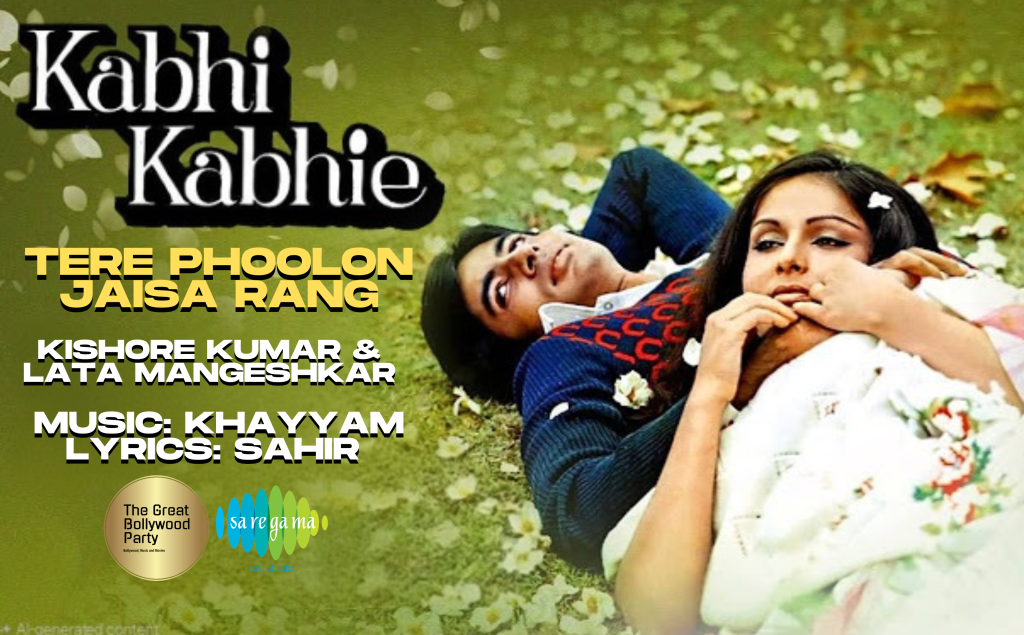
This track was clearly designed to cater to the younger generation of the mid-1970s, and it carries a lighthearted, almost parody-like quality. The antaras begin with familiar melodic phrases before tumbling into the playful refrain “Chahe chal chooriyan”, giving the song its cheeky, teasing character.
Sahir Ludhianvi is spot on here, crafting lyrics that are mischievous and flirtatious rather than philosophical. Lines like “Tera phoolon jaisa rang, tere shishey jaisa ang” praise beauty with exaggerated admiration, while the banter shifts into playful threats—“Seedhey seedhey haan karti hai, ya chalna hai thaane”—mocking the melodrama of youthful romance. The lyrics are less about deep reflection and more about capturing the fun, teasing energy of courtship, making this song stand out as one of the lighter moments in the album.
Khayyam’s genius lies in how he balances parody with genuine melody. While the song is playful, he still grounds it in a soft, romantic framework typical of the 1970s. The tune carries a gentle charm, with orchestration that feels familiar yet fresh. It’s not as classically rooted as some of the other tracks, but it borrows the light melodic contours of traditional styles, giving the song a nostalgic “old is gold” vibe while still appealing to youthful audiences.
The duet between Kishore Kumar and Lata Mangeshkar is the highlight. Kishore brings his trademark mischievousness, while Lata counters with sweetness and mock sternness, creating a delightful back-and-forth. Their interplay mirrors the on-screen chemistry of Rishi Kapoor and Neetu Singh, captured in scenic, intimate settings that enhance the song’s youthful energy.
Tera Phoolon Jaisa Rang
Your Color Is Like That Of Flowers
Tere Shishey Jaisa Ang
Your Body Is Like Glass/Crystal
Padhi Jaise Hi Nazar
As Soon As My Eyes Fell On You
Main To Rah Gaya Dang
I Was Completely Stunned/Amazed
Aahtey Jaatey Karey Tang
You Tease Me While Coming And Going
Tere Acche Nahin Dhang
Your Ways Are Not Good – I.E., You Are Naughty
Main To Karungi Sagai
I Will Get Engaged/Involved
Kisi Doosre Ke Sang
With Someone Else
Ho Mere Hotey Koi Aur Kare Tere Baar Gaur
If Someone Else Pays Attention To You While I Am Here
Yeh Na Hoga Kisi Taur
This Will Not Happen In Any Way
Chahey Chaley Chooriya
Even If Bangles Break – Implying Drama/Fights
Seedhey Seedhey Haan Karti Hai
Will You Agree Straightaway?
Ya Chalna Hai Thaane
Or Should We Go To The Police Station?
Thane Jaatey Jaatey Mar Gaye
Many Lovers Have Died On The Way To The Police Station
Tujhse Kahin Diwane
Trying To Get You
Yunhi Nakhre Na Kar Teri Choti Ka Pakad
Don’t Show Tantrums, I’ll Pull Your Hair
Yunhi Nakhre Na Kar Teri Choti Ka Pakad
Don’t Show Tantrums, I’ll Pull Your Hair
Tujhey Launga Main Ghar Chahey Chaley Chooriya
I’ll Bring You Home Even If Knives Get Used
Oo Tujhey Launga Main Ghar Chahey Chaley Chooriya
I’ll Bring You Home Even If Knives Get Used
Haye Teri Baaten Hai Ajab
Oh My, Your Talks Are Unique
Arey Ohley Hona Hai Jo Ab
Whatever Has To Happen, Let It Happen Now
Tujhey Meri Hi Kasam Kahin Dhana Na Ghazab
You Have My Swear, Don’t Torment Me
Ho Tujhey Chodenge Na Hum Chahey Rokhey Hamme Rabh
I Won’t Leave You Even If God Tries To Stop Me
Tu Hai Itna Hi Tang Toh Main Rang Tere Rang Le Main Chali Teri Sang Chahey Chal Chooriya
If You’re So Restless, Then I’ll Become Yours, I’ll Come With You Even If Knives Get Used
Le Main Chali Sang Chahey Chal Chooriya
I’ll Come With You Even If Knives Get Used
Ooo ..Ooo..
Dil Aane Ki Baat Hai Jab Koi Lag Jaye Pyara
The Heart Falls For Someone When You Like Them
Dil Par Kiska Zor Hai Dil Ke Aage Har Koi Haara
Who Can Control The Heart, Everyone Loses To It
Haaye O Mere Yaara
Oh My Friend
Dil Aane Ki Baat Hai Jab Koi Lag Jaye Pyara
The Heart Falls For Someone When You Like Them
Dil Par Kiska Zor Hai Dil Ke Aage Har Koi Haara
Who Can Control The Heart, Everyone Loses To It
Haaye O Mere Yaara
Oh My Friend
Dil Milne Se Tera Mera Mel Hai
We’ll Unite As Our Hearts Connect
Dil Milna Muqadaaron Ka Khel Hai
The Connection Of The Hearts Is Destiny
Hoo Dil Milne Ka Melaa Ye Jahaan Hai
The World Is A Fair Where Hearts Unite
Dil Milne Se Duniya Jawan Hai
The World Is Young Due To The Union Of The Hearts
Hoo Teri Ishak Walaa Koi Maane Yah Na Maane Peh Kaman Hai
Believe It Or Not, The Arrow Of Love Is Rogue
Dil Aane Ki Baat Hai Jab Koi Lag Jaye Pyaara
The Heart Falls For Someone When You Like Them
Dil Par Kiska Jor Hai Dil Ke Aage Har Koi Haara
Who Can Control The Heart, Everyone Loses To It
Haye O Mere Yaara
Oh My Friend
Mohabbat Har Dil Kaa, Aahaa
Love For Every Heart … Aa Ha
Mohabbat Har Dil Kaa Armaan
Love Is The Desire For Every Heart
Mohabbat Har Dhadkan, Aahaa
Love For Every Heartbeat … Aa Ha
Mohabbat Har Dhadkan Ki Jaan
Love Is The Life Of Every Heartbeat
Kisi Se Kar Le Tu , Aa
With Someone … Yes
Kisi Se Kar Le Tu Pahechaan
Get Introduced To Someone
Kisi Ko De De Dil, Uuhun
Give Your Heart To Someone … Hmm Hmm
Kisi Ko De De Dil Aur Jaan
Give Your Heart And Life To Someone
Kisi Ko Rakh Dil Mein, Kese?
Keep Someone In The Heart … How
Kisi Ko Rakh Dil Mein Mahemaan
Keep Someone In The Heart As A Guest
Kisi Ke Reh Dil Mein, Acchaa
Stay In Someone’s Heart … Is It
Kisi Ke Reh Dil Mein Mahemaan Hooo
Stay In Someone’s Heart As A Guest
Jawaani Aati Hai Haay
Youth Comes … Oh My
Jawaani Aati Hai Ek Baar
Youth Comes Only Once
Ye Mausam Raheta Hai Haay Haay
This Weather … Oh My
Ye Mausam Raheta Hai Din Chaar
This Weather Stays For A Short While
Na Khona Is Root Ko, Kyoon?
Don’t Lose This Season … Why
Na Khona Is Root Ko Bekaar
Don’t Lose This Season For No Reason
Nahi Nit Khiltaa Ye, Kyaa?
It Doesn’t Bloom … What
Nahi Nit Khiltaa Ye Gulzaar
This Garden Doesn’t Bloom
Kisi Se Kar Lena, Kyaa?
With Someone … What
Kisi Se Kar Lena Ikaraar
With Someone, Accept Your Love
Kisi Se Le Lena, Kyaa?
Take From Someone … What
Kisi Se Le Lena Ikaraar Hooo
Take From Someone, The Acceptance Of Love
Kisi Ke Khaatir Ho Badnaam
Getting Defamed For Someone Else
Yahi Hai Dilwaalo Ka Kaam
This Is The Job Of People In Love
Zamaana Chahe De Ilzaam
Even If The World Blames You
Samaj Har Tohamat Ko Inaam
Consider Every Allegation As A Gift
Kisi Se Le Dil Ka Aahaa
Take From Someone … Aa Ha
Kisi Se Le Dil Ka Paygaam
Take The Message Of The Heart From Someone
Kisi Ko De Dil Ka Aahaa
Give Someone … Aa Ha
Kisi Ko De Dil Ka Paygaam Hooo
Give Someone The Message Of The Heart
Brrrrrrrrrrrrr..Hoy.
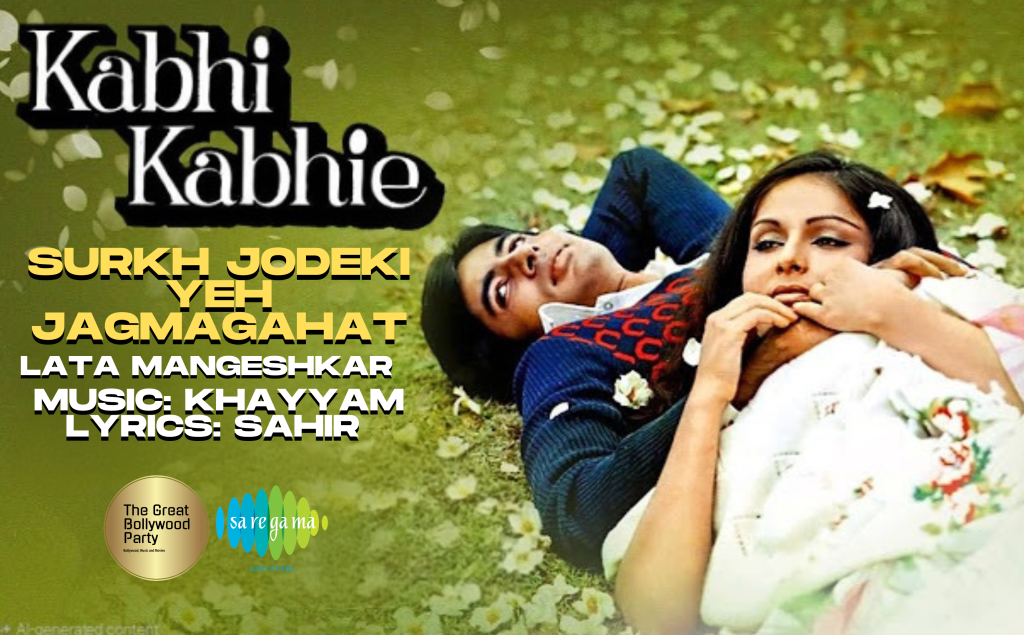
Surkh Jode Ki Yeh Jagmagaahat underscores the farewell moment of a bride, tying the narrative back to themes of family, tradition, and destiny. It contrasts sharply with the youthful banter of Tera Phoolon Jaisa Rang or the rebellious defiance of Pyar Kar Liya To Kya. Here, the mood is solemn, reminding the audience that love and marriage are not just personal choices but also cultural rites of passage.
Khayyam renders the song in a folk-inspired style, keeping the arrangement minimal and authentic. The melody is plaintive, with rhythmic cadences reminiscent of Punjabi wedding songs. Unlike the romantic or philosophical tracks in the album, this composition deliberately avoids grandeur, instead leaning into simplicity to heighten the emotional resonance. The restrained orchestration allows the lyrics and vocal delivery to dominate, making the song feel raw and heartfelt.
The lyrics of Surkh Jode Ki are steeped in cultural symbolism. The “surkh joda” (red bridal dress) becomes the central metaphor for departure, beauty, and transformation. Verses like “Sada chidiyan da chamba ve, babul asan udh jana” (“We are a flock of sparrows, dear father, we’ll fly away”) evoke the traditional Punjabi vidai imagery, where daughters are compared to birds leaving the nest. The song oscillates between descriptions of adornment—bindi, bangles, anklets—and the emotional plea of a daughter to her father, asking where she must now go. It is Sahir at his most poignant, blending folk idiom with poetic melancholy.
The vocal delivery is layered and significant. The traditional folk portions are sung by Pamela Chopra, wife of Yash Chopra, continuing the custom that she contributes at least one song to his films. Her earthy, folk-inflected tone anchors the track in authenticity. The main melodic parts are sung by Lata Mangeshkar, whose sweet, soft whispers embody tenderness and sorrow. Lata’s voice adds purity and emotional depth, while Pamela’s contribution ties the song to its cultural roots. Together, they create a dual texture—folk authenticity and cinematic sweetness.
Sadaa Chidiyaan Da Chamba Ve
We Are A Flock Of Sparrows
Babul Assan Udd Jaana
Dear Father, We’ll Fly Away
Saadi Lammi Udaari Ve
Our Flight Is Very Long
Babul Kede Desh Jaana
Dear Father, Where Should I Go?
Surkh Jode Ki Yeh Jagmagaahat
The Shine Of This Red Dress
Shokh Bindiya Ki Yeh Jhilmilahat
The Twinkling Of This Pert Bindi
Choodiyon Ka Yeh Rangeen Taraana
The Sound From These Colourful Bangles
Dhadkanon Ka Yeh Sapna Suhaana
The Beautiful Dream Of My Heartbeats
Jaga Jaga Sa Kajre Ka Jaadu
The Magic Of Kohl-Lined Eyes Has Awakened
Bheeni Bheeni Si Gajre Ki Khushboo
The Slight Fragrance Of Flowers
Naram Hothon Ka Yeh Kapkapana
The Shivering Of These Soft Lips
Garam Chehre Ka Yeh Tamatmana
The Glow Of This Warm Face
Jism Ka Mahka Mahka Paseena
The Aroma From The Sweat Of The Body
Husn Ka Dahka Dahka Nageena
This Diamond-Like Beauty
Jhanjharon Ka Yeh Thham Thham Ke Bajna
The Jingling Of These Anklets
Yeh Sanwarna, Nikharna, Yeh Sajna
This Getting Ready, This Adornment
Kiski Khaatir Hai, Kis Ke Liye Hai
Is For Whom And Why?
Tere Mehlan De Vich Vich Ve
Through Your Mansion’s Door
Babul Dola Naiyo Langda
Dear Father, This Palanquin Won’t Pass
Ik Itt Putta Devaan
I’ll Have A Brick Uprooted
Dhiye Ghar Ja Apne
O Daughter, Go To Your Home
Sadaa Chidiyaan Da Chamba Ve
We Are A Flock Of Sparrows
Babul Assan Udd Jaana
Dear Father, We’ll Fly Away
Saadi Lammi Udaari Ve
Our Flight Is Very Long
Babul Kede Desh Jaana
Dear Father, Where Should I Go?
The soundtrack of Kabhi Kabhie is more than just music—it is a cultural phenomenon. From the philosophical reflections of Main Pal Do Pal Ka Shair Hoon and Main Har Ek Pal Ka Shair Hoon, to the romantic duets like Kabhi Kabhie Mere Dil Mein and Tere Chehre Se Nazar Nahin Hatati, to the rebellious defiance of Pyar Kar Liya To Kya, the maternal tenderness of Mere Ghar Aayi Ek Nanhi Pari, the youthful banter of Tera Phoolon Jaisa Rang, and finally the traditional farewell of Surkh Jode Ki—each song adds a distinct layer to the album’s emotional and thematic tapestry.
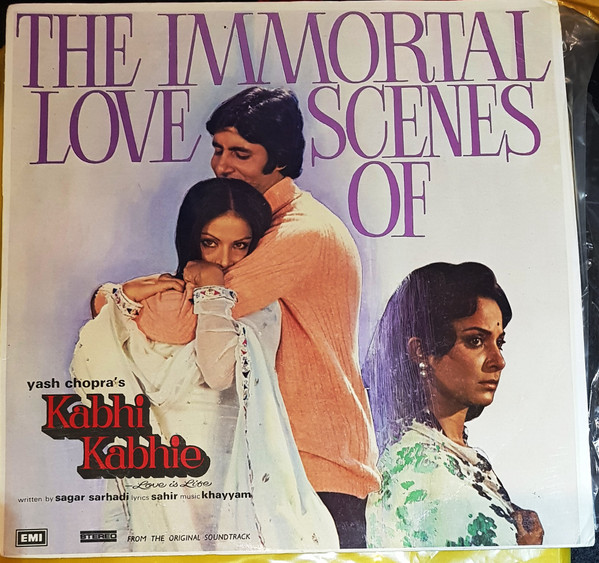
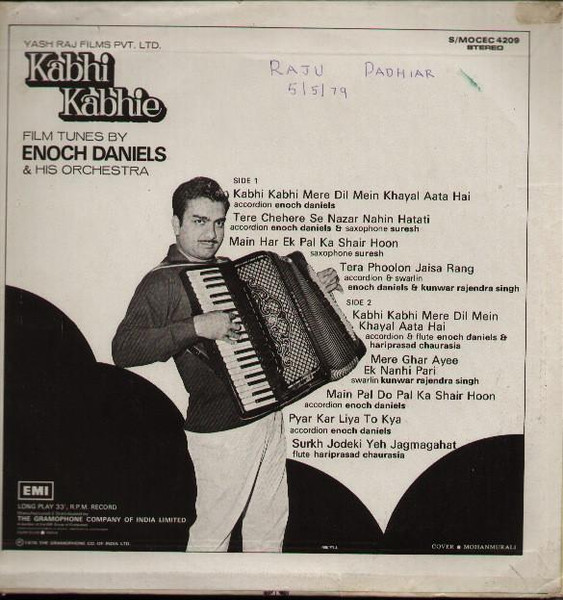
The film and its music became so popular that it spawned not just the original soundtrack LP, but also a Dialogue LP titled The Immortal Love Scenes of Kabhi Kabhie and an Instrumental LP by Enoch Daniels. Few films in Hindi cinema have inspired such extensions, underscoring the enduring resonance of its words and melodies. Its popularity has lasted decades, to the point where even international artists like Nelly Furtado once sang Kabhi Kabhie Mere Dil Mein on stage, proving that its reach transcends borders and generations.
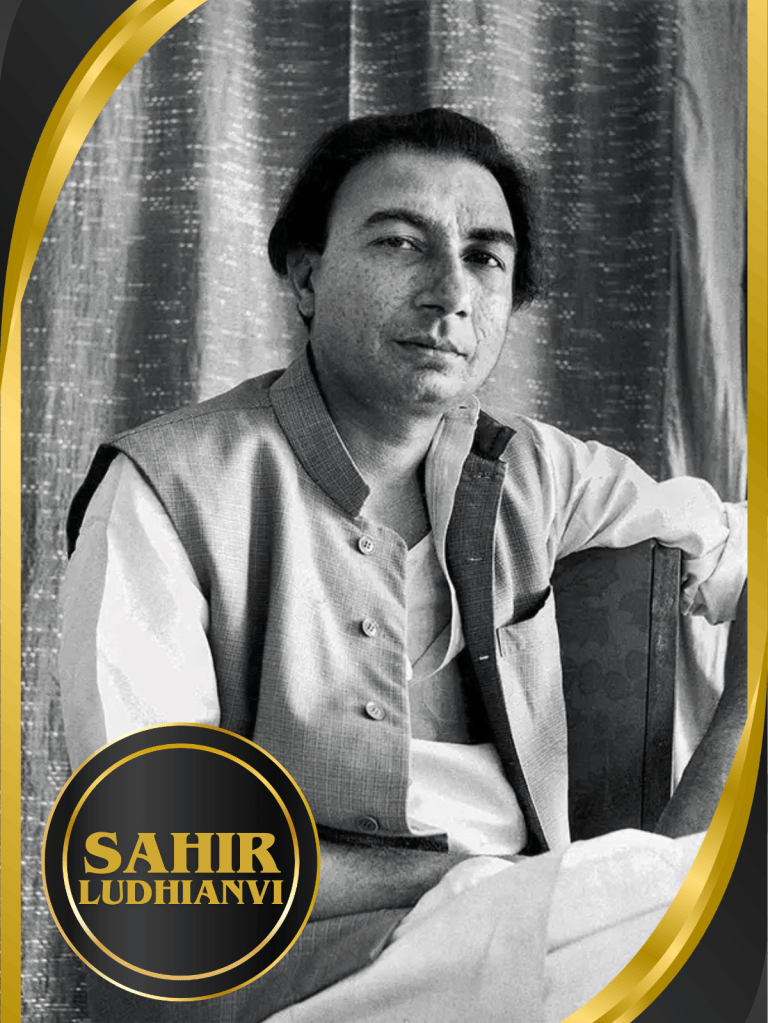
At the heart of this phenomenon lies Sahir Ludhianvi. Forgotten in the melody of the moment was the story of Sahir himself—his unfulfilled relationship with Amrita Pritam, his nazm that gave birth to the film’s title, his life that inspired the story, and his words that inspired a million songs and countless love stories. Sahir, the progressive writer with Leftist leanings, became the messiah of every heart that had experienced sorrow. And why not? For only a heart that has known sorrow can truly appreciate love, even longing.
The film’s success was not guaranteed. Amitabh Bachchan was fresh off Deewar and Sholay, the “angry young man” of the masses—would audiences accept him as a poet with a rose in hand? Waheeda Rehman was past her prime, Rakhee had to fight for attention, and Khayyam’s slow, Sunday-afternoon pace seemed risky in an era of fast numbers. Yet Kabhi Kabhie defied the doomsayers. It changed the way people romanced. It changed the way people dreamt of love. It changed love itself.
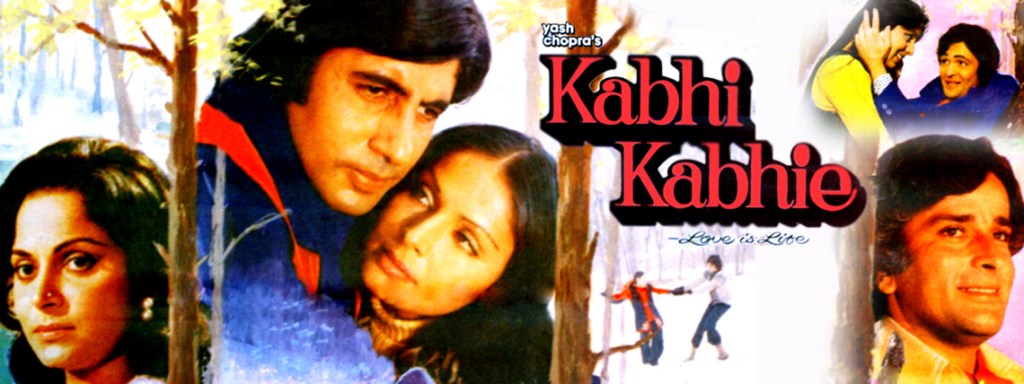
The multi-star cast—Amitabh Bachchan, Shashi Kapoor, Rishi Kapoor, Rakhee, Neetu Singh, Waheeda Rehman—was perfectly balanced by Sahir’s soaked-in-love words, Khayyam’s music that never failed lovers, and Lata Mangeshkar’s voice, keen to keep her supremacy intact. And above all, Yash Chopra, with his Alps, maple leaves, chiffon, and a heart that swore by love, stitched it all together.
Ultimately, the true hero of Kabhi Kabhie is Sahir. His songs, veering close to autobiography, pack in more emotion than all else. Khayyam lent him an able hand, giving variety and beauty to every track. Together, they created a soundtrack that is not just remembered but revered.
Even decades later, parents play Mere Ghar Aayi Ek Nanhi Pari to celebrate the arrival of their daughters, lovers hum Kabhi Kabhie Mere Dil Mein to express longing, and poets recite Main Pal Do Pal Ka Shair Hoon to reflect on impermanence. Sahir’s craft shines through all decades, ages, and generations.
Yes, Kabhi Kabhie is not just worth a rewind—it is a timeless echo of love and longing, a soundtrack that continues to redefine romance across generations
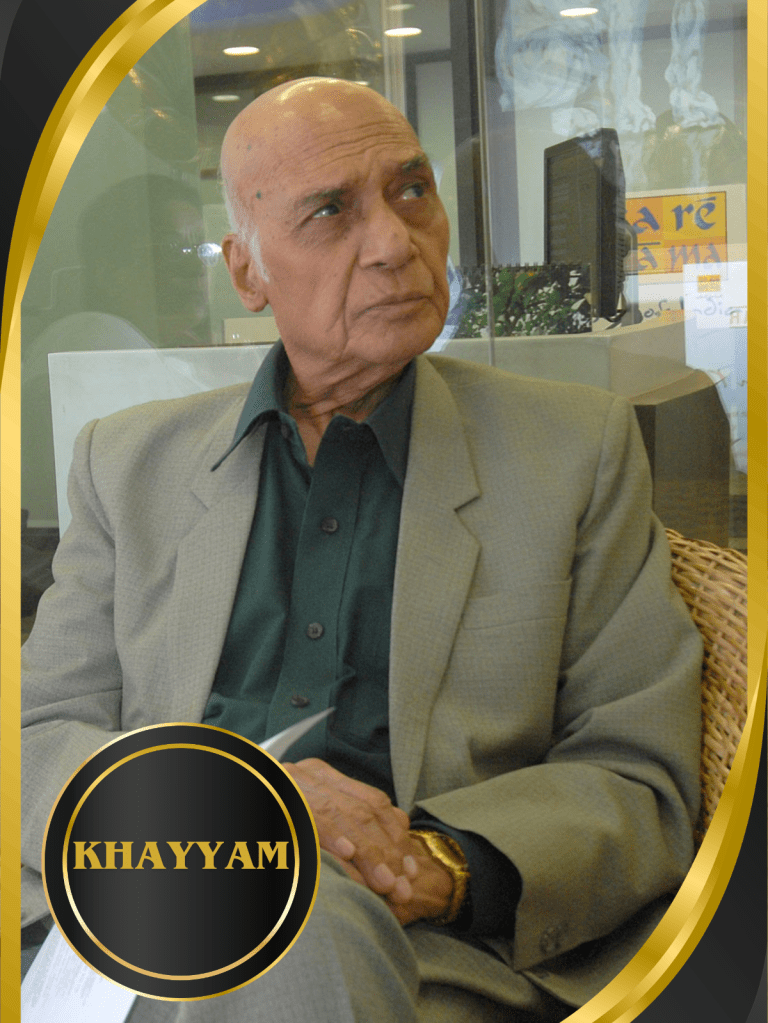
The Real Stars of Kabhi Kabhie:

Rating
★★★★★★★★★★
Keep the Needle Dropping: Join the Conversation If you’re someone who believes that every crackle and pop on a vintage record tells a story, you’re in the right place. We are on a continuous mission to preserve the true sonic integrity of the Golden Era, one deep dive at a time. Don’t let the history of our music fade away—join our growing community of collectors, audiophiles, and history buffs by subscribing to @thegreatbollywoodparty868. Hit that notification bell to ensure you never miss our next investigation into the labels, tracks, and technical tales that defined Bollywood’s legendary sound. Let’s keep the vinyl spinning!

 The Great Bollywood Party