
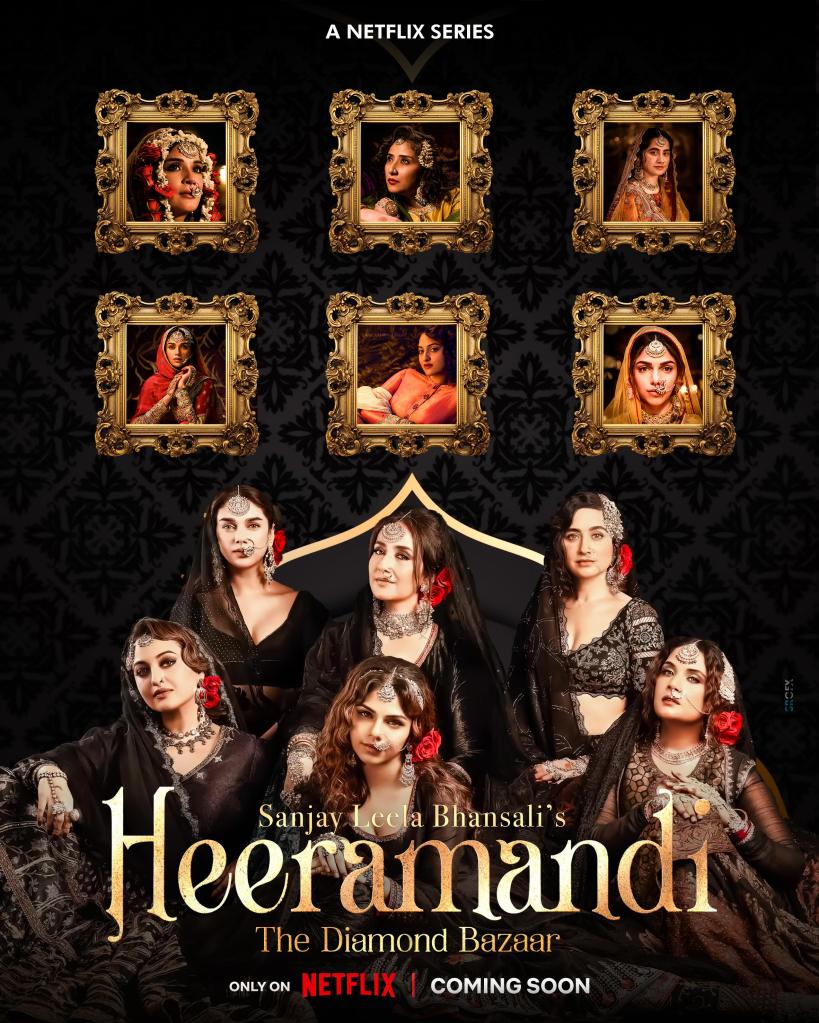
| GENRE | Historical drama |
|---|---|
| CREATED BY | Sanjay Leela Bhansali |
| WRITTEN BY | Screenplay: Sanjay Leela Bhansali Dialogues: Divya Nidhi Vibhu Puri |
| STORY BY | Moin Baig |
| DIRECTED BY | Sanjay Leela Bhansali |
| STARRING | Manisha Koirala Sonakshi Sinha Aditi Rao Hydari Richa Chadha Sanjeeda Sheikh Sharmin Segal |
| MUSIC BY | Songs: Sanjay Leela Bhansali Background Score: Benedict Taylor Naren Chandavarkar |
| COUNTRY OF ORIGIN | India |
| ORIGINAL LANGUAGE | Hindi |
| NO. OF EPISODES | 8 |
Musically one naturally gets excited to hear that a Sanjay Leela Bhansali album has dropped, mostly because we get immediate timeless classics, be it Khamoshi or right up until his last album release of Sukoon, he has carved out gems of tracks from his music directors and when he adorned the role Heeramandi has been anticipated for a while back already, teasers were dropped last year and without a definite date, the anxiety was sky high for this TV debut. But how will Heeramandi’s music feature from the ‘already-heard‘ sounds that Sanjay Leela Bhansali has presented us with?
Let me start with the common notions making the rounds; firstly; many have said that Sanjay Leela has obviously already provided such great music and in context it would be difficult to live up to those soundtracks. Secondly, many have accused him of having Ismail Darbar ghost-compose his recent soundtracks, since they suffer a quaint nostalgic sound from Hum Dil De Chuke Sanam and Devdas. Lastly, it is because his subject matter is seeped in ‘Old-world-settings‘, his music never transcends to the current generation.
Well, i am here to tell you that there is much more to it then just say on the surface of it. Sanjay Leelal Bhansali has proved himself time and again a master at music. When he started off with Guzaarish, we got into his sense of music and felt his pulse for classical music in a contemporary setting. He further cemented this sentiment with the releases of Golyon Ki Raas Leela, Ram Leela, Bajairao Mastani, Padmaavat, Gangubai Kathiwadi and Sukoon. All these soundtracks have certain commonalities that described Sanjay Leela Bhansali. For one his infatuation with Raga Yaman; each album features at-least one track based in Raga Yaman – Can you identify each of them from his music? And his crazy obsession with Ill-fated love, he makes his protagonists to get to the cusp of their goal and then it all ends there right in front of them before they reach their goal. Devdas is a great example of this. Heeramandi is no different in what i have described above.
It is without saying, that the usual features do make a comeback, but the setting and flavour is what has changed. This time round, Heeramandi is featured in pre-independent India, based in the lore of the actual place called Heera Mandi or The Diamond Bazaar, known for its vile’s and wiles but also know for its exclusive art, music, poetry and esteemed manners and ways. This is what Sanjay Leela Bhansali has focused on for his musical interpretation and presentation. Kalank (2019) did feature a bit of this tehzeeb, and the soundtrack by Pritam remains timeless. Sanjay Leela Bhansali does take it a step forward here, in terms adornment to the tracks and keeping the Mujhra flavour pure – we will dive into this when we explain the tracks – but also pays homage to wonderful classics like Pakeezah and Umrao Jaan.
Aas Mohammed Turaz – A. M. Turaz – is Sanjay’s trusted lyricist that aids him in bringing the world of Heeramandi to life, with a sharp sword – his pen. He carves out lyrics that melt the heart and create a frenzy of thoughts. Turaz started his career by writing for television in 2005, after writing scripts for soaps as assistant writer, his first assignment in Mumbai was writing lyrics for film Kudiyon Ka Hai Zamana in 2006. This was followed by Jail, Guzarish, Chakravyuh and Jackpot. His songs like “Udi..” and “Kabhi Jo Badal Barse” got lot of attention. His association with Bhansali proved successful from Guzaarish with him garnering acclaim for his marvelous lyrics.

Heeramandi: An Auditory Odyssey Through the Lanes of Lament and Liberation
In the labyrinth of Lahore’s historical Heeramandi, where the echoes of the past intertwine with the whispers of the present, the series Heeramandi emerges as a narrative tapestry, rich with the hues of pre-independence India. It is within this tapestry that the music, composed by the maestro Sanjay Leela Bhansali, finds its abode, not merely as a backdrop but as a protagonist that narrates the saga of the courtesans with a symphonic eloquence. The soundtrack is an intricate confluence of the classical ragas that have flowed through the veins of the subcontinent for centuries, and the contemporary cadences that speak to the modern soul.

| No. | Song | Artists | Duration |
| 1 | Tilasmi Bahein | Sharmistha Chatterjee | 2:19 |
| 2 | Sakal Ban | Raja Hasan | 2:30 |
| 3 | Azadi | Barnali Chattopadhyay, Archana Gore, Pragati Joshi, Aditi Prabhudesai, Arohi, Aditi Paul, Tarannum Malik Jain, Dipti Rege, Madhura Pranjape | 3:53 |
| 4 | Chaudvin Shab | Shreya Ghoshal | 4:03 |
| 5 | Masoom Dil Hai Mera | Shikha Joshi | 3:56 |
| 6 | Phool Gendwa Na Maaro | Barnali Chattopadhyay | 3:13 |
| 7 | Saiyaan Hatto Jaao | Barnali Chattopadhyay | 5:13 |
| 8 | Ek Baar Dekh Lijiye | Kalpana Gandharva | 4:11 |
| 9 | Nazariya Ki Maari | Madhubanti Bagchi | 3:17 |
| Total Duration | 32:38:00 |

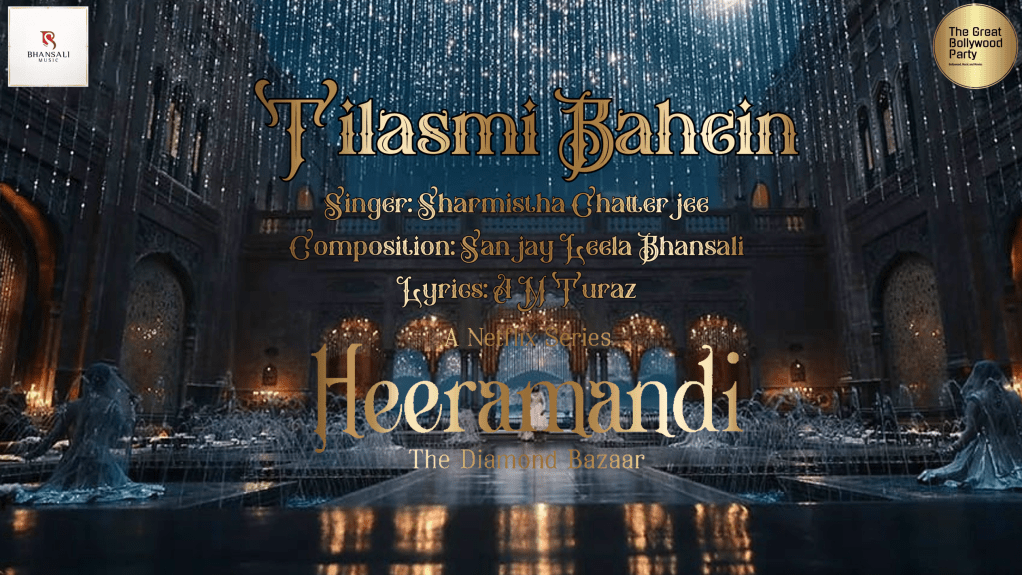
Tilasmi Bahein serves more of a contemporary sound; the composition blends classical nuances with modern instrumentation infused with a middle eastern flavour and probably based on a maqam. The reason for saying this, is probably the heavy weight tracks that follow suit are more inclined to the Hindustani school of Classical Music. Tilasmi Bahein takes a while before it settles in the mind, its a fun track that provides entertainment in context with its picturisation.
Vocals by Sharmistha Chatterjee are great and she renders the track with verve to create the setting perfectly. Her rendition catapults the tune even further, creating a fusion sound in an otherwise classical soundtrack; the most catchy parts are the flows between the lines with ‘Ooooh’s‘ and ‘Aaaah’s‘ by Sharmishtha.
The track is quite short and contains one Mukhda repeated and one antara. Trust Sanjay Leela Bhansali to create a whole scene out of this short track. A. M. Turaz pens quite rich lyrics into this track and makes is seductively sexy. Sonakshi onscreen does a formidable job and brings this track to life on-screen. SLB concocts the Middle Eastern flavour with a variety of stringed instruments like Oud, Guitar, mandolin etc. Darbukas, Daff other percussion instruments create a beautiful ambiance, while the Ney (Arab flute) adds to the exuberance. SLB, A M Turaz & Sharmistha Chatterjee create a rousing track that will get you shaking.

Tilasmi Bahein Thamein,
As I embrace your enchanting arms,
Katoon Main Dil Ki Shamein,
I weave the nights of my heart,
Oh Tilasmi Bahein Thame,
As I embrace your enchanting arms,
Katoon Main Dil Ki Shamein,
I weave the nights of my heart.
Bhar De Aa Chand Ki Chandi,
Infuse me with the brilliance of the moon,
Sone Jaise Tan Me Lake,
Let it flow through me like liquid gold.
Khayiya Khayiya Khayiya Han Kasmein,
I swear, I swear, I swear.
Khayiya Khayiya Khayiya Han Kasmein, Khayiya Khayiya Khayiya,
I promise, I promise, I promise….
Chhalka Jaye Jism Se Makhmali Nasha, Karde Khali Pee Pee Ke Pyala Ye Bhara,
Let the velvet indulgence course through my veins, consume this brimming cup with your sips.
Chhalka Jaye Jism Se Makhmali Nasha, Karde Khali Pee Pee Ke Pyala Ye Bhara,
Let the velvet indulgence course through my veins, consume this brimming cup with your sips.
Katra Katra Mera Bekabu Ho Raha,
My heart beats wildly,
Teri Ijazat Bina Dil Mera, Tere Dil Main Jhake,
It peers into yours without permission,
Khayiya Khayiya Khayiya Han Kasmein, Khayiya Khayiya Khayiya,
I promise, I promise, I promise….
Tilasmi Bahein Thamein,
As I embrace your enchanting arms,
Katoon Main Dil Ki Shamein,
I weave the nights of my heart,
Oh Tilasmi Bahein Thame,
As I embrace your enchanting arms,
Katoon Main Dil Ki Shamein,
I weave the nights of my heart.
Bhar De Aa Chand Ki Chandi,
Infuse me with the brilliance of the moon,
Sone Jaise Tan Me Lake,
Let it flow through me like liquid gold.
Khayiya Khayiya Khayiya Han Kasmein,
I swear, I swear, I swear.
Khayiya Khayiya Khayiya Han Kasmein, Khayiya Khayiya Khayiya,
I promise, I promise, I promise….

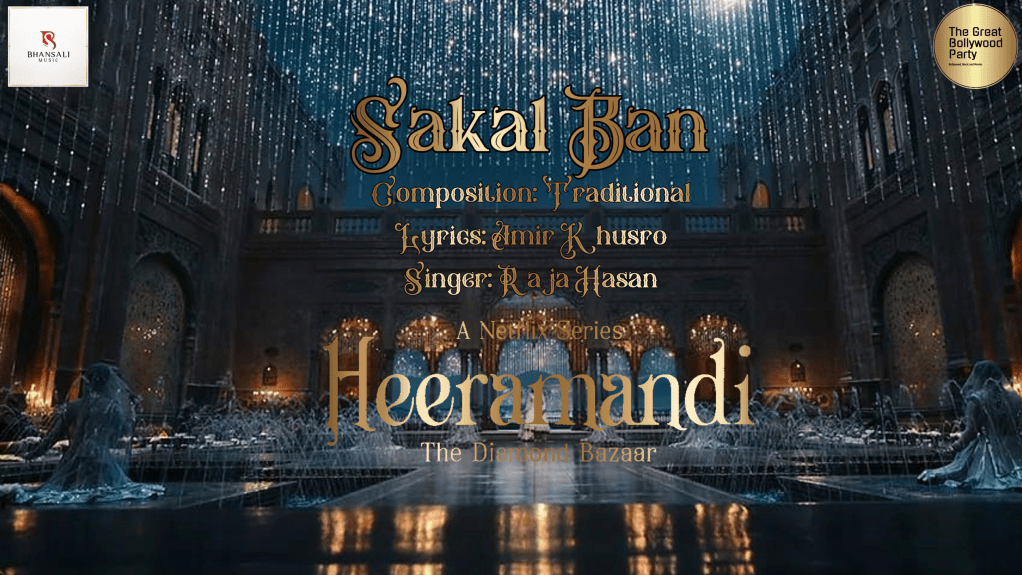
Sakal Ban was the first track to drop from Heermandi, and what a bang it created when it finally made its appearance. There are many great explanations out there for Sakal Ban, and i will share the most important one that i have seen. But i will add some more context; the dhun (tune) is over 750 years old and is seeped in Sufi mysticism. In recent times, i can recall listening to the Qawaali by the Sabri brothers with the same Bandish (Lyric meter) penned by Amir Khusro. In fact when the track dropped i listened to the LP again. It is no doubt a wonderful dhun and bandish. It reappeared in 2015 under the guise of Coke Studio season 8 sung by Rizwan & Muazzam Ali Khan.
Why would this particular track appear in Heeramandi? Hindustani classical music has strict time based renditions of certain Ragas; and it also has such a thing as seasonal ragas. Sakal Ban was composed in Basant Panchhami (Spring time), and rightly so they have used Raga Bahar to depict the seasonality. When i had initially heard it, my thoughts immediately went to Raga Malhar, and it turns out that Raga Bahar & Raga Malhar have the exact same notation, it is the way they are used in Chalan, and Gambhir where they differ, and no doubt Sakal Ban is seeped in Raga Bahar. Interestingly Amir Khusro who composed teh Bandish is also known to be the creator of Raga Bahar. Whilst we still sing ode to his music, let us understand who he really was.
Abu’l Hasan Yaminuddin Khusro, commonly known as Amir Khusro (also Khusrau, Khusrow) Dehlavi. He was the Indian subcontinent’s poet laureate. He is renowned for being one of the most prolific and diverse poets of the 13th and 14th centuries. He created Hindustani (Urdu) lyrical poetry and qawwali, infusing Persian and Arabic influences into Hindustani classical music. He invented the sitar and musical genres like Khayal and Tarana.
- Sufi saint Amir Khusrow was Nizamuddin Auliya’s spiritual student. His lifespan was 72 years, of which 60 lived in the courts of as many as ten distinct Delhi Sultans.
- He was a talented musician and poet. Persian was his preferred language for poetry composition. He also wrote about 500,000 verses in other languages, including Turkish, Arabic, Braj Bhasha, Hindavi, and Khadi Boli.
- His Khaliq-e-bari, the world’s first printed dictionary, features Persian and Hindi words. He is designated as the “father of qawwali.”
- He is also recognised for adding Persian and Arabic aspects to Indian classical music. He is also known as the creator of the khayal and Tarana musical genres.
- Later, under Mohammad Shah Rangile, Khayal attained its pinnacle.
- It is now a crucial component of Hindustani classical music.
- His connections to several sultans allowed him to visit and reside in different parts of India, exposing him to various regional customs.
- This made it easier for him to incorporate many musical influences. He received favours from three Khilji Kings
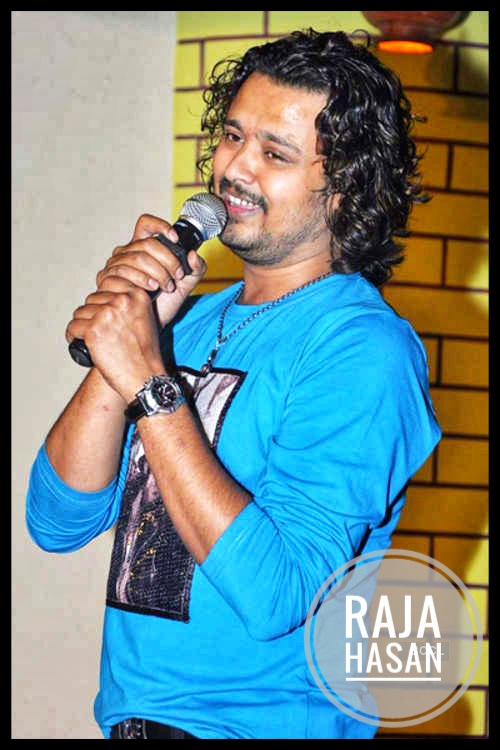
Sanjay Leela Bhansali has not listed himself as the composer but rather to ‘Traditoional‘ as is the case with such compositions. we have seen this multiple times in films including Pakeezah’s Inhi Logon Ne and Mera Saaya’s Jhumka Gira Re. But it would wrong of me to say that Sanjay Leela Bhansali’s contribution isn’t present, he has put this track together with great force. Even the singer that he chose, Raja Hasan has a distinctive rustic voice that is replete with classical adornment, hear his Alaap rendition after the antara, the meend and gamak are splendid, sharp and fastidious. The middle tarana portions by the all female chorus are ably kempt and full of rhythm. Raja Hassan treats the Bandish with care and placidly sings the Aaroha and Avaroha with the brilliance of the spring fervor. Raja Hasan’s rendition of Amir Khusro’s poetry is a revelation. The fusion of folk rhythms and Raga Bahar resonates with authenticity. Bhansali’s orchestration adds layers of grandeur. SLB handles the ektaal with grace. An ensemble of Tabla and Dholak comprising Sanjeev Sen, Musharraf Khan, Surendra Vedant Lele, Kathak Padhant, Vijayshree Chaudhary and Agrima Grover create a dream for SLB, listen to how they carefully follow the antara and mukhda precisely beating the percussion with measured effect. This track has no doubt caught on and many have already made dancing videos on social media.
Raja Hasan comes from the desert city of Bikaner, Rajasthan. He considers his father, Rafik Sagar (singer and music composer) and his grandfather Allah Rakha Khan as his gurus in singing. Raja Hasan was a runner-up in the reality TV show Sa Re Ga Ma Pa Challenge 2007 and winner of Ek Se Badhkar Ek on Zee TV, Music Ka Maha Muqqabla on StarPlus, Ustaadon Ka Ustaad on Sony and, IPL Rockstar on the Colors channel. He also done guest appearances in many tv shows (fiction and non-fiction and reality shows). He and Arijit Singh Debuted Together in Aaja Nachle Song in High School Musical 2. His First Single Song was given by his Sa Re Ga Ma Pa Challenge 2007 Mentor Vishal–Shekhar in De Taali Song was Maari Teetri.
Aye Sakal Ban A A
Oh, In every field…
Sakal Ban Phul Rahi Sarson
In every field, the yellow mustard is in full bloom.
Sakal Ban Phul Rahi Sarson
Yellow mustard blooms in every field.
Sakal Ban In every field!
Ambwa Phute Tesu Phule
Mango buds are popping open, as are other types of flowers.
Ambwa Phute Tesu Phule
Mango buds and other sorts of blooms are opening up
Gori Karat Singar
A young woman is applying her makeup.
Malaniya Garhwa Le Ayi Ghar Sonh Sakal Ban
Gardener-girls have arrived with bouquets in hand.
Sakal Ban Phul Rahi Sarson
Yellow mustard blooms in every field.
Sakal Ban In every field!
Tarah Tarah Ke Phool Mangaye
Several varieties of flowers were ordered.
Le Garhwa Hathan Mein Aye
They arrived holding bouquets in their hands
Nizamuddin Ke Darwaje Par, Mere Nizamuddin Ke Darwaje Par
On Nizamuddin’s threshold,
Wo Mohe Awan Keh Gaye Ashiq Rang Aur Beet Gaye Barson
They promised to meet me, but years have passed
Sakal Ban Phool Rahi Sarson
Yellow mustard blooms in every field.
Sakal Ban
In every field!

Azadi was the third track to drop and initially its sound and feel didn’t impact me much, but after watching it on-screen, it grabbed me by the throat and not because of the freedom cry, but the actual layering and meaning of the track. A M Turaz pens a lyrics that can mean attaining Freedom in Life and Death and that is what is so poignant about it. Its the tune that takes its time to grow, but most definitely does and is mounted grandly onscreen. The initial portion is played out in the funeral and that’s when i understood the full potential of the lyrics.
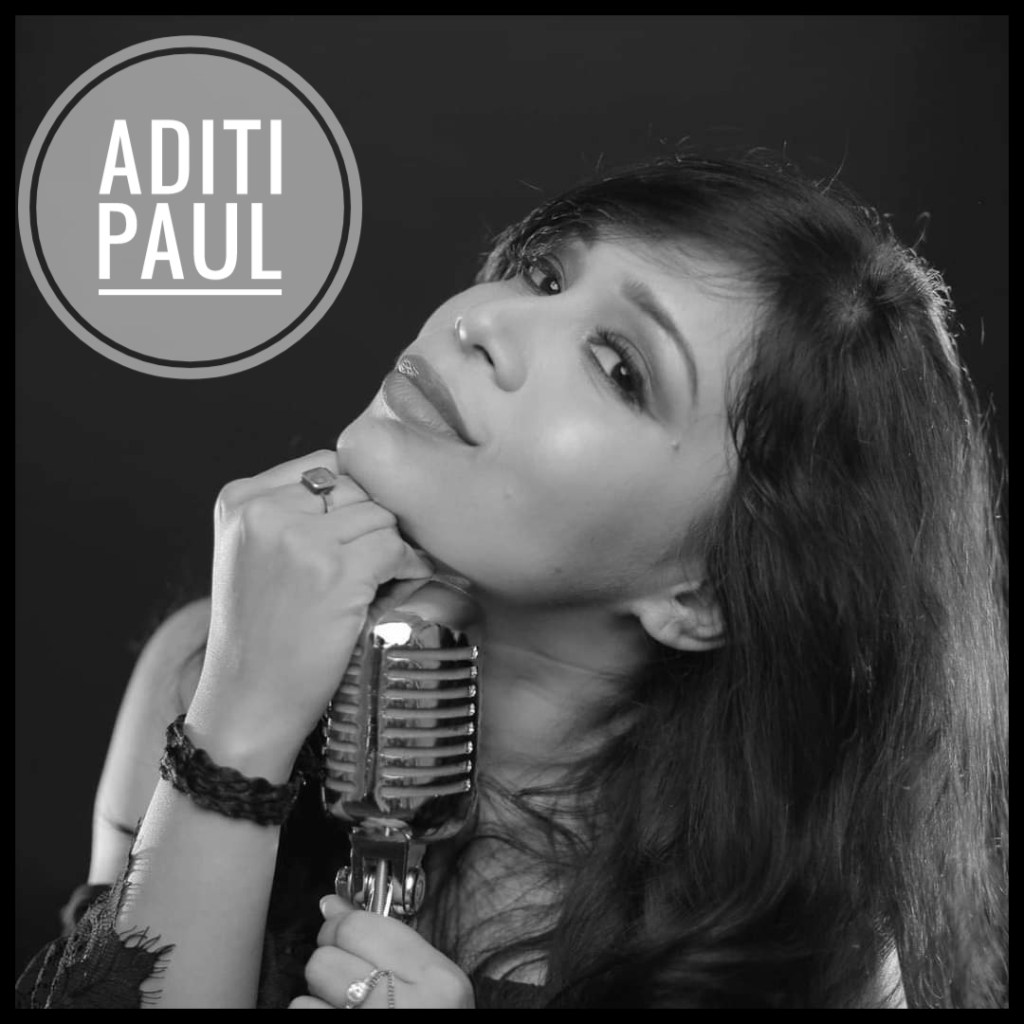
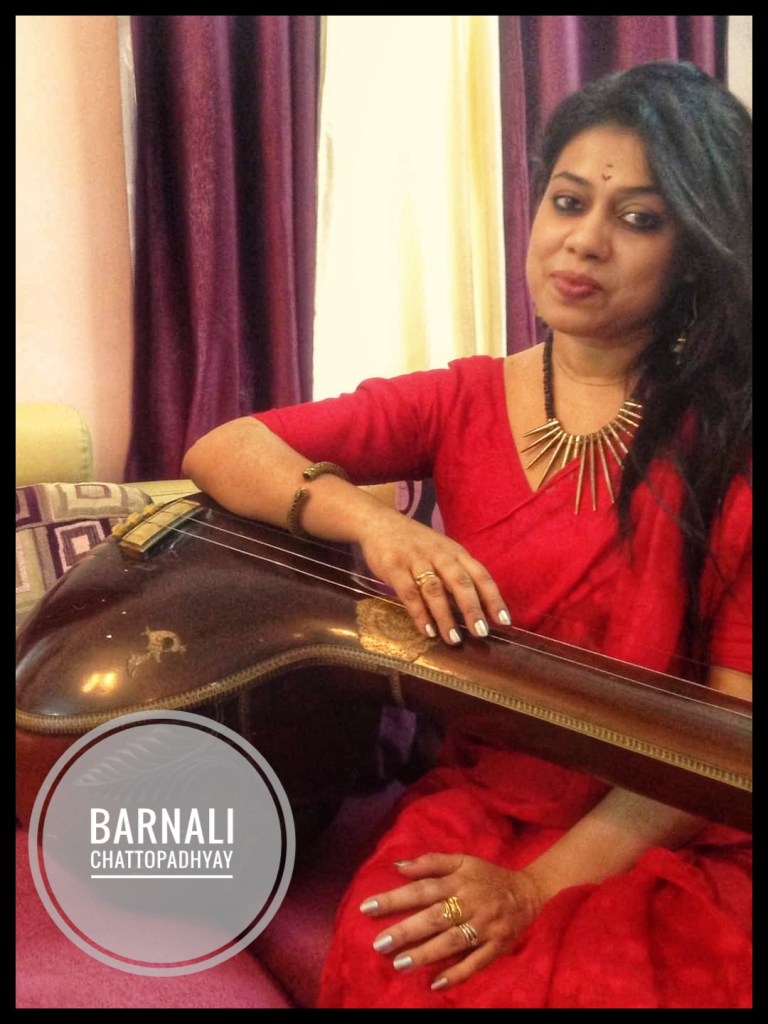
SLB presents the track as a full on chorus track, and this is not the first time he has done that, he presented us with Albela Sajan from Bajirao Mastani in the same format previously, but there is definite power in the echoing of voices. In Unison, the voices are impactful and like thunder, shakes the very core; that is why SLB has used percussion like Pakhwaj to create a widened impact. SLB composed this track in Raag Kedar, and for its measure, the chorus of Barnali Chattopadhyay, Archana Gore, Pragati Joshi, Aditi Prabhudesai, Arohi, Aditi Paul, Tarannum Malik Jain, Dipti Rege and Madhura Pranjape provide a studious example of how classical music in unison creates a layered thought. The chorus echoes resilience. They glide through the swaras of the Raga Kedar with ease, especially the meend in the higher octaves. Ektaal is employed to ensure the dearth of the situation.
Barnali Chattopadhyay is an Indian classical musician of the Benares Gharana. Merging the renditions of life with music, uniting the soundtrack of every life.
Archana Gore has performed in the capacity of Lead Singer at various occasions in and outside the country in various theme-based shows. She has performed in Various Dance Dramas with well known Dance Guru Ashatai Joglekar and Rajashri Shirke. She has also performed with Sureshji Wadkar, Sudeshji Bhosle, Shridharji Phadke.
Aditi Prabhudesai has been working in the music industry since 2004, she has been working as a faculty member at the Suresh Wadkar Ajivasan Music Academy teaching music since 2007.
Aditi Paul is an Indian playback singer. She is the playback voice behind the song Ang Laga De Re From the Hindi movie Goliyon Ki Raasleela Ram-Leela, In the debut season of Indian Idol in 2004, Aditi Paul was among the top 10 leading participants.
Tarannum Malik Jain is a well-known playback singer with a golden voice and virtuoso life performer hit songs. Being a trained Hindustani classical singer, she has immense love for folk music and folk stylings of her country. She has bagged many hit songs in Bollywood like ‘Saiyaara‘ from ‘Ek Tha Tiger, ‘Jhoome Re Gori‘ from ‘Gangubai Kathiawadi’, ‘Raees‘ title song, and many more.
Deepti Rege is an accomplished her masters in Hindustani classical vocalist as well as a Qualitative Market Research consultant, successfully managing dual careers.
Madhura Pranjape works as a vocal trainer at Suresh Wadkar’s AJIVASAN Music Academy






Humein Dekhni Hai Azadi Har Hal Mein Humein Dekhni Hai
We need to see freedom, regardless of the price.
Humein Dekhni Hai Azadi
We have to witness freedom
Mit Jayega Nam Is Zulmat Ka Lehrayega Parcham Mohabbat Ka
The label of this oppression will be eliminated, and the banner of love will sway.
Shehron Shehron Ka Hoga Hokar Humein Ishq Abadi Dekhni Hai
We will obtain city after city and have to see the city of love
Humein Subeh Aazadi Dekhni Hai Humein Dekhni Hai Aazadi
We have to see the dawn of liberation, we have to see freedom
Har Hal Mein Humein Dekhni Hai Humein Dekhni Hai Aazadi
We must see freedom, no matter the costs.
Sab Taj Pade Be-sudh Honge Hum Apne Hakim Khud Honge
All the crowns will be unconscious, and we will govern ourselves
Bharat Ma Ki Azmat Ko Humein Bante Shehzadi Dekhni Hai
The glory of Mother India, we must see her become a princess
Humein Dekhni Hai Azadi Har Hal Mein Humein Dekhni Hai
We need to see freedom, regardless of the price.
Humein Dekhni Hai Azadi
We have to witness freedom

If you have seen any Sanjay Leela Bhansali film, you will know that the final track is always the most hard hitting. In many ways, we are treated to a complete Visual and Aural experience as we experience Chaudhavi Shab for the first time. It entices us from the get go, there is no wasting time, the tune, it’s orchestration and lyrics are a masterclass at composing. This is the best track on the complete soundtrack and SLB saves it for the reigning queen of playback singing – The Shreya Ghoshal. And my word, Shreya soars in this wonderfully composed Raga Yaman Kalyan track. Yes, Sanjay retains his discovery and favourite Raag for his neice’s (Sharmin Segal) debut.
But before we go any further, can we address the Ode to Pakeezah in this enigma? Listen carefully to the Taal, it is the first clue – SLB uses kaherwa taal to convey this similarity. The beats are an exact measure in both tracks. Close your eyes and concentrate on tabla (is that even possible with Shreya’s rich rendition?), you will hear Ghulam Mohammed’s tabla taal. The second clue lies in the lyrics – a Moonlit night is repeated just the way Sahibjaan describes the evening of her Mujhra’s in Chalte Chalte and Thade Rahiyo. It is exactly this that creates a subtext of beauty beyond understanding and the mystical nature behind our influences. I am glad that SLB does this as it presents Aalamzeb with Sahibjaan’s context.
What more can i say of Shreya Ghoshal that i haven’t mentioned in previous reviews? She is a total blessing to us all. From her beginning in Devdas right up to this track in Heeramandi, she has never swayed us the wrong way. She only has one track in Heeramandi and we know the context why, She was the voice for Aalamzeb and SLB wanted to retain that identity just for her, but wow, it is of supreme timbre. Shreya Ghoshal is truly the Lata Mangeshkar of this generation, and this track proves it.
SLB composed this Mujhra in Raga Yaman Kalyan in the ghazal genre, The lyric meter and subtext are straight giveaways. The Ghazal is a form of amatory poem which has its origination around Persia and Arabia. A ghazal may be understood as a poetic expression of both the pain of loss or separation and the beauty of love in spite of that pain. the Raga is delivered through smooth flowing lyrical verses, also with slight vocal intonation and dulcet modulation. I had described this in the Gaman music review that i had done and moreso it applies to Chaudhavi Shab.

Chaudhavi Shab Ko Kahaan, Chand Koi Dhalta Hai
On A Moonlit Night The Resilience Of The Moon Does Not Dim
Aaa.. Chaudhavi Shab Ko Kahaan, Chand Koi Dhalta Hai
Aaaa…On A Moonlit Night The Resilience Of The Moon Does Not Dim
Haaye Paani Mein
Oh, In The Water
Haaye Paani Mein, Kaun Jalta Hai?
Who Burns In Water?
Chaudhavi Shab Ko Kahaan, Chand Koi Dhalta Hai
On A Moonlit Night The Resilience Of The Moon Does Not Dim
Chaudhavi Shab Ko Kahaan, Chand Koi Dhalta Hai
On A Moonlit Night The Resilience Of The Moon Does Not Dim
Dard Aisa Ki, Hasi Aati Hai
My Pain Is Such, That A Smile Arises
Saans Seene Mein, Fasi Jaati Hai
My Breath Gets Entangled In My Chest
Jismein Kaante Biche Ho Manzil Tak
A Pathway Spread With Thorns Until The Destination
Jismein Kaante Biche Ho Manzil Tak
A Pathway Spread With Thorns Until The Destination
Aise Raste Pe Kaun Chalta Hai
Who Treads On A Path Like This?
Haaye Paani Mein
Oh, In The Water
Haaye Paani Mein
Oh, In The Water
Haaye Paani Mein, Kaun Jalta Hai
Who Burns In Water?
Chaudhavi Shab Ko Kahaan, Chand Koi Dhalta Hai
On A Moonlit Night The Resilience Of The Moon Does Not Dim
Chaudhavi Shab Ko Kahaan, Chand Koi Dhalta Hai
On A Moonlit Night The Resilience Of The Moon Does Not Dim
Jeeta Hua Ishq Haar Baithe Hai
I’ve Lost This Game Of Love I Thought I’d Won
Isi Tarah Dil Ko Maar Baithen Hain
And Broke My Heart
Jaise Humne Male Hai Haath Apne
The Way I’ve Wrung My Hands In Despair
Jaise Humne Male Hai Haath Apne
The Way I’ve Wrung My Hands In Despair
Jaise Humne Male Hai Haath Apne
The Way I’ve Wrung My Hands In Despair
Aise Haathon Ko Kaun Malta Hai?
Have You Seen Anyone Doing The Same?
Haaye Paani Mein
Oh, In The Water
Haan…
Yes..
Haaye Paani Mein Kaun Jalta Hai?
Who Burns In Water?
Chaudhavi Shab Ko Kahaan, Chand Koi Dhalta Hai
On A Moonlit Night The Resilience Of The Moon Does Not Dim
Chaudhavi Shab Ko Kahaan, Chand Koi Dhalta Hai
On A Moonlit Night The Resilience Of The Moon Does Not Dim
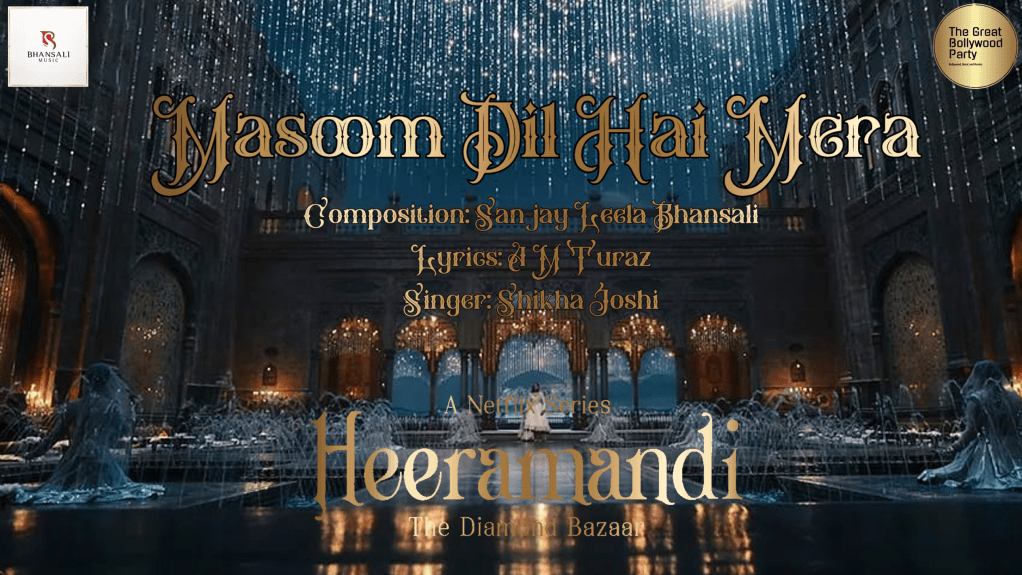
I would tout this track as the most complex from Heeramandi, both on and off screen. There is a caveat with regards to ill-fated love songs, and its goes something like this – Invoke pain and love in the strongest form but also make it syrupy sweet so that it will be difficult to pass up. Masoom Dil Hai Mera invokes this unhinged revenge against us listeners in the form of Raga Basant and Raga Yaman. SLB creates this geet with musical adornments of taal, tarana and bol that betray our senses, puts our heart on a pedestal and hangs it from there. Raga Yaman in its’s second outing, makes a forlorn gesture at clinging onto love – and it’s antara and mukhda structure finds great similarity in Thodi Badmaash Ho Tum from Saawariya .
Lajjo was a treat to watch and in a short but absolutely magnetic role, Richa Chaddha creates a hole in our hearts, ultimately with Masoom Dil Hai Mera. A Geet (song or lyrical poetry) in Hindi and in Urdu may refer to any poem set to music that can be sung alone or as a duet or in chorus. It has remained popular in all parts of the Indian sub-continent particularly in the Hindi and Urdu speaking areas. In Urdu poetry its roots are found in Dakhani Shairi whose most important feature is its Indian ethos with the strain being feminine, and the tone, delicate and elegant; Urdu Geets mainly speak about feminine anguish. Here Lajjo is expressing unrequited love.
Heaving adornment of Tarana and Bol begin the track in Raga Basant, Ghungroo and swarmandal introduce the beautiful voice of Shikha Joshi, in my first instance of listening to this track when i heard Shikha stretch the word Rishta Gham-O-Se Mera, my heart melted. and then she proceeds to sing Haaye Ram…. My eyes were besotted with tears. SLB uses Raga Basant in the intro, interludes and outro for the track, orchestrating these pieces with finesse, Sarangi, Sitar and harmonium are fused into them and creaties a feeling of anticipation, just the same way Lajjo portrays it onscreen. It makes me so happy too see that the artists singing the Tarana and Bol have been named and they are: Somee Sailesh, Nilanjana Chandra Tara, Alka Mandakini Jagdish, Shailaja Mishra, Neha Jagsish Goraiya, Vinod Pandit, Aditya Nayak, Ashmit Patel, Mangal Dubey, Mahesh Parihar and Ashish Kathak
The antaras and mukhdas are composed in Raga Yaman, and hear Shikha handle the slide in the meend movements, she cries out to the audience, see where my innocent heart has got me. Lyrics by A M Turaz are deeply heartfelt and render an almost depressive state of mind, but yet again, in a way that is so glazed in honey, you cannot pass it up. Shikha delivers the swaras with gusto, in fact hear the way she sings the lyrics in different intonations, especially towards the end with lamenting grace, the alaaps mid-way serve to extend the emotion, and she conveys the innocence and charm that a song like this requires. From the mind of SLB – We have yet another track that will be remembered for it’s dexterity and classy composition. It is in this confluence that the song “Masoom Dil Hai Mera,” rendered with poignant perfection by Richa Chadha in the role of Lajjo, resonates as a clarion call of a heart untouched by the world’s weariness. The acclaim it has garnered is a testament to its ability to touch the deepest chords of the human spirit.
Shikha Joshi creates a tapestry of mesmerizing melodies and soul-stirring rhythms by drawing influence from the many folk traditions of India. Her proficiency with ancient Indian instruments, such the sitar and tabla, gives her compositions a unique flair and an authentic feel. Joshi’s passionate voice perfectly capture the essence of Indian folk music, further elevating her already impressive musical prowess.

Masoom Dil Hai Mera Isse Tod Diya Jaaye
Go Ahead And Shatter My Innocent Heart
Masoom Dil Hai Mera Isse Tod Diya Jaaye
Go Ahead And Shatter My Innocent Heart
Rishta Gham-O-Se Mera.. Haaye Ram
My Grief….Oh, Lord
Rishta Gham-O-Se Mera Ab Jod Diya Jaaye
Go Ahead And Betroth Me To My Grief
Jod Diya Jaaye
Betroth Me To My Grief
Masoom Dil Hai Mera Isse Tod Diya Jaaye
Go Ahead And Shatter My Innocent Heart
Masoom Dil Hai Mera Isse Tod Diya Jaaye
Go Ahead And Shatter My Innocent Heart
Masoom Dil Hai Mera
My Innocent Heart
Masoom Dil Hai Haaye
Oh My Innocent Heart
Hai Aap Bade Naamwale
You Are Held High In Repute
Bade Naamwale
Held High In Repute
Bade Naamwale
Held High In Repute
Badnaam Hoo Bahut Mein
While I Am Draped In Disrepute
Aaaaaaaaaa
Aaaaaaaaaa
Badnaam Hoo Bahut Mein
While I Am Draped In Disrepute
Mujhe Chhod Diya Jaaye
Go Ahead And Reject Me
Chhod Diya Jaaye
Reject Me
Masoom Dil Hai Mera Isse Tod Diya Jaaye
Go Ahead And Shatter My Innocent Heart
Masoom Dil Hai Mera Isse Tod Diya Jaaye
Go Ahead And Shatter My Innocent Heart
Rishta Gham-O-Se Mera.. Haaye Ram
My Grief….Oh, Lord
Rishta Gham-O-Se Mera Ab Jod Diya Jaaye
Go Ahead And Betroth Me To My Grief
Jod Diya Jaaye
Betroth Me To My Grief
Masoom Dil Hai Mera Isse Tod Diya Jaaye
Go Ahead And Shatter My Innocent Heart
Masoom Dil Hai Mera Isse Tod Diya Jaaye
Go Ahead And Shatter My Innocent Heart
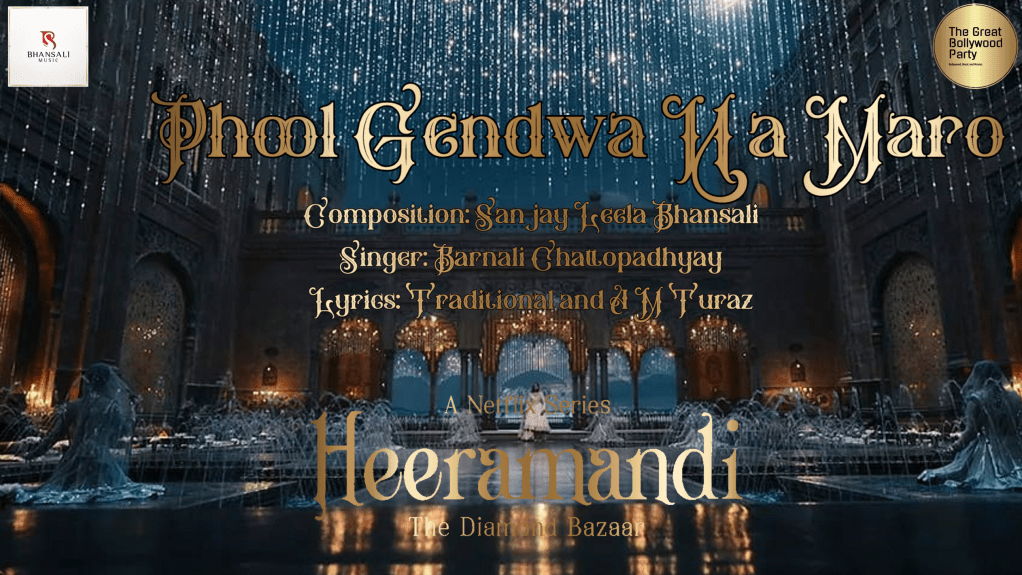
Thumri is a vocal genre or style of Indian music. The term “thumri” is derived from the Hindi verb thumuknaa, which means “to walk with a dancing gait in such a way that the ankle-bells tinkle.” The form is, thus, connected with dance, dramatic gestures, mild eroticism, evocative love poetry and folk songs, especially from Uttar Pradesh, though there are regional variations. Thumri is characterized by its sensuality, and by a greater flexibility with the raga. The first mention of Thumri goes back to the 19th century, with a link to the classical dance form Kathak. This was the bandish ki thumri or bol-baant and it evolved mostly in Lucknow in the court of nawab Wajid Ali Shah. At that time, it was a song sung by tawaifs or courtesans. According to historical records, a new version of thumri arose in the late 19th century, which was independent of dance, and much more slow-paced. This form was called bol-banav and it evolved in Varanasi.
SLB has brought two genre’s of classical music in Ghazal and Geet, as well as featured three spectacular ragas. He now takes strides as he uses Thumri and raga to bring Phool Gendwa Na Maro to life. The ‘Phool Gendwa Na Maro‘ song continues the poetic tradition of ‘gendaa-baazi’, a game that was played with calendula / marigold flowers (mostly by young women). It is mentioned in Urdu poetry, like these verses by Mus’hafi, which capture the liveliness & playfulness of the game. Once again here, we havea Bandish that was created hundreds of years ago and traditionally kept alive by the gharana’s. The fact that it has survived this far and has now appear in Heeramandi is astonishing, merely for the fact that we are singing a thought that might have came about hundreds of years ago. Watching Aditi Rao Hydari onscreen is a dream- she flows like a cloud, her hand movements are precise and watch her face as the classical embellishments come on; it is equally dreamy.
Barnali Chattopadhyay playfully brings this swansong for Bibbojaan onscreen, with a grand appeal. Presented in Raga Bhairavi, there is no shortage of adornment vocally or instrument-wise. Sitar, Sarod, Sarangi and Santoor are mesmerizingly brilliant in this kaherwa taal presentation. SLB creates an effective version of this song which has appeared twice already onscreen. Its first instance was in the film Funtoosh (1956), sung by Asha Bhosle with music by S. D. Burman, and in the second instance it appeared in the film Dooj Ka Chand (1964), sung by Manna Dey with music by Roshan, There are thousands of recorded version in the classical world, however the first recorded version appeared on 78rpm shellac by Rasoolanbai in the early 1930’s. Lyrics are as it appeared in its bandish, with an antara added on by A M Turaz.
Hooo Phool Gendwa Na Maro
Don’t Throw These Flowers At Me
Haaa Phool Gendwa Na Maro
Don’t Throw These Flowers At Me
Na Maro Na Maro
Don’t Throw, Don’t Throw
Phool Gendwa Na Maro
Don’t Throw These Flowers At Me
Na Maro Na Maro
Don’t Throw, Don’t Throw
Phool Gendwa Na Maro
Don’t Throw These Flowers At Me
Lagat Karejwa Pe Chhot
It Hurts My Heart Deeply
Lagat Karejwa Pe Chhot
It Hurts My Heart Deeply
Na Maro Na Maro
Don’t Throw, Don’t Throw
Phool Gendwa Na Maro
Don’t Throw These Flowers At Me
Na Maro Na Maro
Don’t Throw, Don’t Throw
Dus Tha Hua Phool Nighoda Man Mora Tadpaaye
The Sting Of These Bloody Flowers Bruises My Soul
Dus Tha Hua Phool Nighoda Man Mora Tadpaaye
The Sting Of These Bloody Flowers Bruises My Soul
Rag Rag Mein Mori Tees Uthe Aur
Every Pore Of Mine Feels Stabbed
Uthe Kahe Na Maro Na Maro
As It Bleeds, I Am Pleading… Don’t Throw
Phool Gendwa Na Maro
Don’t Throw These Flowers At Me
Na Maro Na Maro
Don’t Throw, Don’t Throw
Phool Gendwa Na Maro
Don’t Throw These Flowers At Me
Na Maro Na Maro
Don’t Throw, Don’t Throw
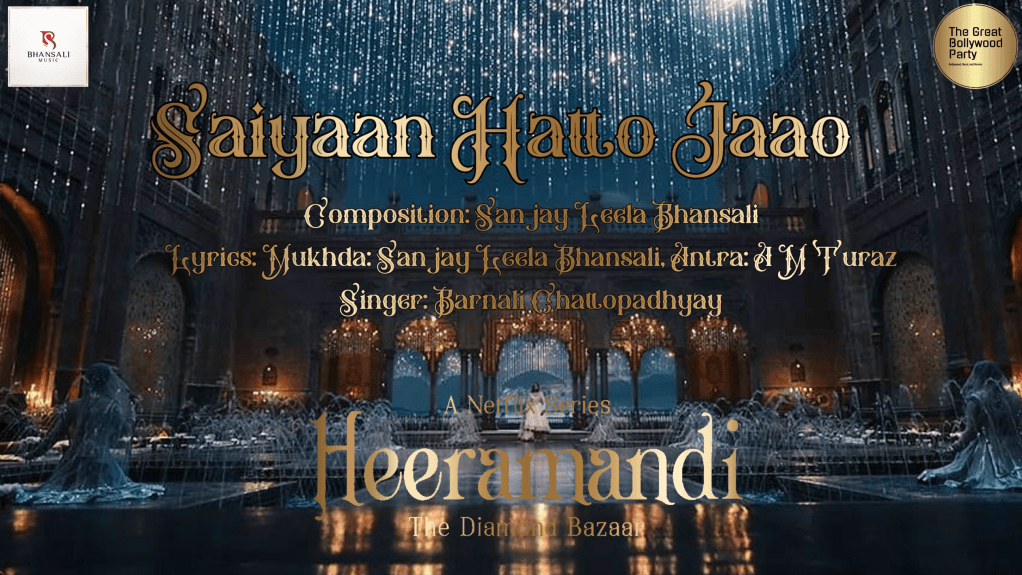
The introduction song to Bibbojaan and the first track to appear onscreen in Heermandi. The track is a thumri based on Raga Jog, and has a very seductive feel to it. The lyrics by A M Turaz are suggestive but never obscene. In this scene we get to see the beautiful doe-eyed Hydari prove her dancing chops in a very dusky aesthetic. Aditi Rao Hydari dances beautifully showcasing all the adaa of Kathak for this particular style of classcial music.
Barnali Chattopadhyay sings this thumri like a dream, and this is a brand new original composition by Sanjay Leela Bhansali, and A. M. Turaz. This is the longest track on the album and is built from the foundation with beautiful use of Tarana and soft flows of stretched notes to give effect to the feel. Barnali has one again performed wonderfully; the vocal strength required to sing these swaras in a measured style is something that requires ample practice. Her alaap renditions are truly heavenly, ; the chorus provides great support to the flow of the track with the Chhed-Chhaad, its evocative and sublime. The chorus here is comprised of Somee Sailesh, Nilanjana Chandra Tara, Alka Mandakini Jagdish, Shailaja Mishra, Neha Jagsish Goraiya, Vinod Pandit, Aditya Nayak and Ashmit.
Oh Saiyaan Hatto Jaao
Stay Away, My Love
Tum Bade Wo Ho
I Know What You Desire
Oh Saiyaan Hatto Jaao
Stay Away, My Love
Tum Bade Wo Ho
I Know What You Desire
Raat Beeti Jaayen In Chadh Aahein
Night Is Fading Into Dawn
Ib Ghar Jaane To Do
Now, Please Let Me Go Home
Ohhh Saiyyan Ib Ghar Jaane Do
My Love, Please Let Me Go Home
Oh Saiyaan Hatto Jaao
Stay Away, My Love
Tum Bade Wo Ho
I Know What You Desire
Oh Saiyaan Hatto Jaao
Stay Away, My Love
Tum Bade Wo Ho
I Know What You Desire
Ahhhhhh
Saans Na Nad Aur Sakhiyo Veri Poochhungi
Everyone Will Want To Know
Raat Kahan Thi Thehri
Where I Have Spent The Night
Aaaaaa Saans Na Nad Aur Sakhiyo Veri Poochhungi
Everyone Will Want To Know
Raat Kahan Thi Thehri
Where I Have Spent The Night
Laaj Sharm Se Marjaungi
I Will Die Of Embarrassment
Ohhhhh Laaj Sharm Se Marjaungi Main Ohhhh
Ooohhh I Will Die Of Embarrassment Ohhhhhh
Oh Saiyaan Hatto Jaao
Stay Away, My Love
Tum Bade Wo Ho
I Know What You Desire
Oh Saiyaan Hatto Jaao
Stay Away, My Love
Tum Bade Wo Ho
I Know What You Desire
Bhed Jiya Ke Sab Kholega
They Will Open My Heart
Subha Papiha Jab Bole Ga
The Early Morning Cry Of The ‘Papiha’ Will Reveal All (Bird With A Melodious Call)
AAAA Bhed Jiya Ke Sab Kholega
They Will Open My Heart
Subha Papiha Jab Bole Ga
The Early Morning Cry Of The ‘Papiha’ Will Reveal All (Bird With A Melodious Call)
Laaj Sharm Se Marjaungi Main Ohhhh
I Will Die Of Embarrassment Ohhhhhh
Ohhhhh Laaj Sharm Se Marjaungi Main Ohhhh
Ooohhh I Will Die Of Embarrassment Ohhhhhh
Oh Saiyaan Hatto Jaao
Oh Stay Away, My Love
Tum Bade Wo Ho
I Know What You Desire
Oh Saiyaan Hatto Jaao
Oh Stay Away, My Love
Tum Bade Wo Ho
I Know What You Desire
Raat Beeti Jaayen In Chadh Aahein
Night Is Fading Into Dawn
Ib Ghar Jaane To Do
Now, Please Let Me Go Home
Ohhh Saiyyan Ib Ghar Jaane Do
My Love, Please Let Me Go Home
Saiyyan
My Love
Saiyyan
My Love
Saiyyan Ahhhhhhh
My Love

The Ghazal ‘Ek Baar Dekh Lijiye‘ comes as a thought in the series, but here SLB metes out a full four minute track for us to revel in with the wonderment of A M Turaz’s shayari. It is a passionate expression of longing and desire that enchants; it is pictured on Aalamzeb, and as you might have guessed it, It is also based on Raga Yaman. It’s third and final outing in Heeramandi. Kalpana Gandharv croons this track with consummate ease and her vocal timbre is one that is immediately attractive. SLB has fun composing the taal, when Kalpana sings, it is in Ektaal and helps to conveys the thoughts of the heart. The interludes immediately shift to a faster tempo, like that of an increased heartbeat. The sitar, violin stand out bringing the right amount of dreaminess to its composition.
The lyrics compare the feelings to those of a madman and a moth, symbolising the all-consuming nature of love. To experience the enrapture of their beloved, the protagonist is willing to give up everything. The imagery of being lost in their eyes paints a vivid picture of the protagonist’s surrender to love’s enchantment. The song conveys a sense of urgency and desperation as the protagonist pleads for their beloved’s attention.
Kalpana Gandharv, a fourth generation in a family of well known musicians. Her inimitable style and powerful stage presence make her performances unforgettable. Her voice training started early at home in classical music under the tutelage of her grandfather Shri. Mohan Singh ji, who is a renowned Harmonium player in the Indian film industry. Her father Ashok Gandharva well known violinist trained her and pushed Kalpana to learn various instruments like guitar, keys which lead to her growth as a composer.

Ek Bar Dekh Lijiye,
Oh, Just Take One Look At Me,
Ek Bar Dekh Lijiye,
Just One Glance, That’s All I Ask.
Deewana Bana Dijiye,
Make Me A Madman With Love,
Ek Bar Dekh Lijiye,
Just One Look, That’s All It Takes
Jalne Ko Hai Taiyar Hum,
I’m Ready To Burn In Your Flame,
Parwana Bana Dijiye,
Make Me A Moth, Drawn To Your Light.
Ek Bar Dekh Lijiye,
Just One Look, That’s All I Need.
Itni Pee Ke Ja Na Sake, Uth Kar Kahin Bhi Hum,
I’m So Intoxicated By You, I Can’t Stand Up, I Can’t Move.
Itni Pee Ke Ja Na Sake, Uth Kar Kahin Bhi Hum,
I’m So Lost In Your Eyes, I Can’t See Anything Else. Aankhon Ko Apni Aap Ek,
With Just One Look From Your Eyes,
Mehkhana Bana Dijiye,
Make Me A Slave To Your Beauty
Ek Bar Dekh Lijiye,
Just One Look, That’s All I Need
Kuch Bhi Dikhayi Na De Hamein,
And I Can’t See Anything Else,
Siwa Aapke Kahin Pe,
Anywhere But You.
Kuch Bhi Dikhayi Na De Hamein,
I Can’t See Anything Else
Siwa Aapke Kahin Pe,
But You….
Sare Jahan Se Aap Hamko, Begana Bana Dijiye,
From The Whole World, Make Me A Stranger.
Ek Bar Dekh Lijiye,
Just One Glance.
Deewana Bana Dijiye, Ek Bar Dekh Lijiye,
Make Me A Madman. Just One Glance,
Jalne Ko Hai Taiyar Hum,
And I’m Ready To Burn.
Parwana Bana Dijiye, Ek Bar Dekh Lijiye,
Make Me A Moth, Just One Glance…

Nazariya Ki Maari is a Thumri based on Raga Maru Bihag, if the name sounds familiar to you, then you most probably know its original lyrical composition by Naushad in Pakeezah. SLB pays tribute to Pakeezah , yet again and showcases the delicate Thumri. The Pakeezah version is based on Raga Khamaaj. A powerful rendition by Madhubanti Bagchi; an Indian singer, composer and musician; a disciple of the Agra Gharana, her repertoire includes the genres of Indian classical, pop and playback singing. Madhubanti was introduced to music by her father and received her initial training under his tutelage. When she was in the third standard she started her formal training with the Agra gharana exponent Shrimati Subhra Guha. Later, she had also taken lessons from the renowned thumri singer Vidushi Purnima Chowdhury.
SLB has introduced us to a bevy of singers that are capable of performing masterfully in Heeramandi. Raga Mahru Bihag is not easy to navigate, but Madhubanti does so well with great effort. It takes many years of practice to be able to render such tracks so gracefully. The swarmandal opens to a throaty alaap in Raga Mahru Bihag, in a mystical landscape. The shehnai sounds the thought of wedding bliss, and the ektaal hypnotizes the superb rendition by Madhubanti. The harmonium is prevalent through out, but did you hear the first interlude? Listen closely, Sanjay plays motifs from Salaam-E-Ishq Meri Jaan from Muqaaddar Ka Sikander as an ode Rekha and Kalyanji Anandji. Sitar, violin and sarangi also decorate this Thumri. . At around 2:40 sec hear Madhubanti scale the Aaroha and Avaroha of Maru Bihag like a superstar! I would sure love to hear more in the future by Madhubanti!! It really gives me great hope to see that younger singers have this kind of vocation and skill. Please also make sure you listen Madhubanti’s thumri from the film Goldfish titled Bachpan Ki Galiyan and her rendition of Siva Tere from Sanjay Leela Bhansali’s album – Sukoon.

Nazariya Ki Maari
The Way You Look At Me
Mari Mori Guiyan
Takes My Breath Away
Nazariya Ki Maari
The Way You Look At Me
Mari Mori Guiyan
Takes My Breath Away
Nazariya Ki Maari Haaaye Raaam
The Way You Look At Me…. Oh Lord
Nazariya Ki Maari
The Way You Look At Me
Mari Mori Guiyan
Takes My Breath Away
Nazariya Ki Maari Maari
The Way You Look At Me
Nazariya Ki Maari
The Way You Look At Me
Mari Mori Guiyan
Takes My Breath Away
Nazariya Ki Maari
The Way You Look At Me
Koi Jaake Ved Bhulawo
Someone Please Go And Call The Doctor
Koi Jaake
Someone
Koi Jaake Ved Bhulawo
Someone Please Go And Call The Doctor
Aake Dhare Mori Naari Haaye Ram
To Come And Treat My Illness Oh, God
Aake Dhare Mori Naari
To Come And Treat My Illness
Nazariya Ki Maari Maari
The Way You Look At Me
Nazariya Ki Maari
The Way You Look At Me
Mari Mori Guiyan
Takes My Breath Away
Mari Mori Guiyan
Takes My Breath Away
Mari Mori Guiyan
Takes My Breath Away
Mari Mori Guiyan
Takes My Breath Away
Nazariya Ki Maari
The Way You Look At Me
Mari Mori Guiyan
Takes My Breath Away
Mari Mori Guiyan
Takes My Breath Away
Mari Mori Guiyan
Takes My Breath Away
Mari Mori Guiyan
Takes My Breath Away
The soundtrack is an intricate confluence of the classical ragas that have flowed through the veins of the subcontinent for centuries, and the contemporary cadences that speak to the modern soul. Bhansali’s music is not just an auditory experience; it is a visual one, painting scenes with its melodies, dressing characters with its rhythms, and moving the narrative forward with its thematic leitmotifs. Each note is imbued with the signature grandeur of Bhansali’s cinematic vision, creating an opulent auditory spectacle that mirrors the visual magnificence of the series.
The music of Heeramandi is a poetic odyssey that traverses the spectrum of love, loss, and rebellion. Each track is a vignette, capturing the essence of the series’ overarching narrative and the indomitable spirit of its women. Bhansali, as both a filmmaker and a composer, demonstrates a virtuosity that transcends genres, crafting a soundscape that is as much a genre in its own right as it is a part of the series.
In conclusion, the music of Heeramandi is an unparalleled celebration of feminine energy, a symphony of resilience, and a homage to the timeless art of storytelling through music. It stands as a monumental achievement in Bhansali’s illustrious career and a must-experience for connoisseurs of music and narrative alike. The series, with its auditory grandeur, invites listeners to embark on a journey through the annals of Heeramandi, to live, to feel, and to be liberated.
Rating
★★★★★★★★
Keep the Needle Dropping: Join the Conversation If you’re someone who believes that every crackle and pop on a vintage record tells a story, you’re in the right place. We are on a continuous mission to preserve the true sonic integrity of the Golden Era, one deep dive at a time. Don’t let the history of our music fade away—join our growing community of collectors, audiophiles, and history buffs by subscribing to @thegreatbollywoodparty868. Hit that notification bell to ensure you never miss our next investigation into the labels, tracks, and technical tales that defined Bollywood’s legendary sound. Let’s keep the vinyl spinning!

 The Great Bollywood Party
A truly wonderful and detailed analysis / review of the music of this series. Great insights. I’m going to come back to this from time to time to refresh my memory of the deep information you have provided as well as your own thoughts. Great writing!
LikeLike
Thank you so much for the kind comments Muz Bhai, i really appreciate it. You have always been such a great support, right from the time of the Pakeezah review. Bless you brother.
LikeLike
Massom dil hai mera looks like maru bihag
LikeLike
Hello, Thanks for the comment, i understand what you are saying, maybe show me parts where it displays Maru Bihag. Thanks.
LikeLike
loved how intricate details are mentioned and complete analysis is given. Good efforts 💕
LikeLike
Thank you so much for this wonderful compliment, and for reading the review. 🙏🏼💕
LikeLike