
Have you ever settled down with a vintage Bollywood LP, expecting the warm, lush tones of the Golden Era, only to be met with a thin, “tinny” sound that feels like it’s fighting with your speakers? If you have, you’ve likely encountered the era of Electronically Reprocessed Stereo.
Today, we dive into a five-year period (1969–1974) that gave us some of the most frustratingly “fake” sounding records in Indian music history. It was a journey of economic desperation, global competition, and technical trickery that forever marred some of our most beloved soundtracks.
The Need for “Fake” Stereo
In the late 1960s, the global music industry was pivoting. Consumers wanted “Stereo.” To keep up without re-recording entire libraries, companies invented “Electronically Reprocessed Stereo.”
In India, the arrival of the global giant Polydor in 1968 forced HMV (EMI) to rethink their strategy. Polydor brought fresh stereo equipment, giving HMV a run for its money. HMV’s response? To take their vast mono archive and “fake it” to maintain market share.
The Four Methods of Deception
How did they turn a single mono track into two? They used four primary (and often disastrous) methods:
- Splitting Frequencies: Sending treble to one channel and bass to the other [04:55].
- Delay & Echo: Playing the same audio in two streams with a 1.5ms delay to create a “spatial” effect [05:18].
- Phase Shifting: Moving the audio signal to create an unnatural sense of space [05:42].
- Reverberation: Adding fake echo to make instruments sound like they were in a different room [06:04].
“The manipulation introduced artifacts and distortions that degraded the sound quality… resulting in an unbalanced mix.” [06:47]
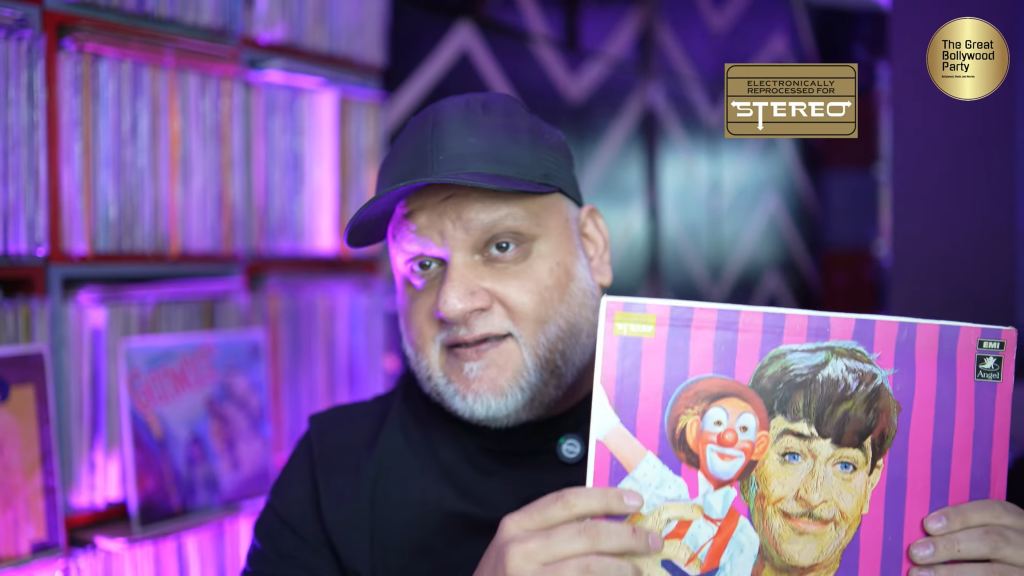
Identifying the Culprits: The Catalog Codes
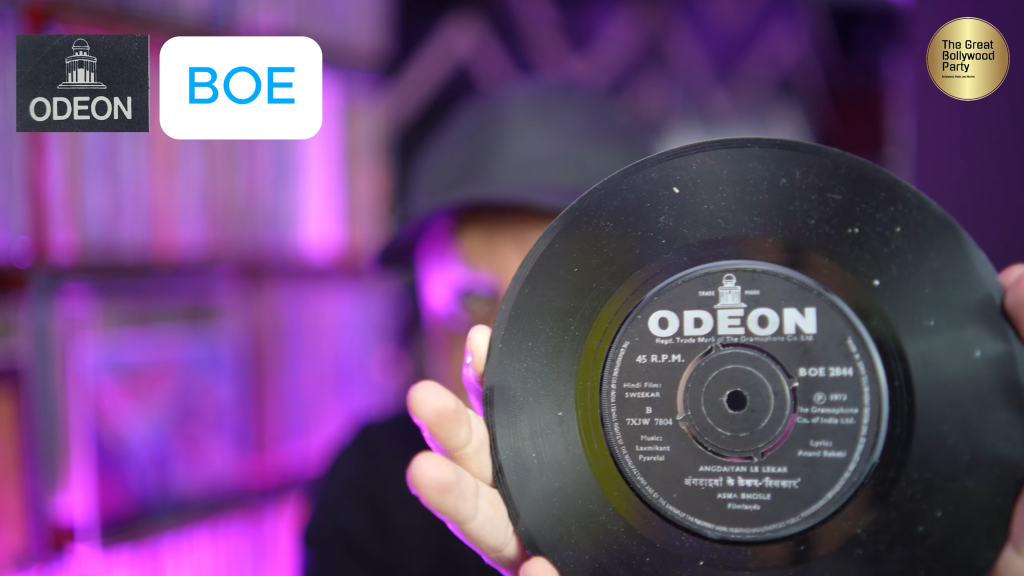
For the enthusiast, identifying these pressings is a matter of looking at the catalog number. Anything with a D/ or D forward slash indicates a reprocessed format.
- D/3AEX Series: The Angel releases. This included the double LP of the illustrious Mera Naam Joker [11:43].
- D/MOE Series: The Odeon label. A notable example is Naushad’s Background Music Scores (1970) [14:37].
- D/EALP Series: The “Red Dog” HMV label (1973-1974), featuring soundtracks like Aap Ki Kasam [17:10].
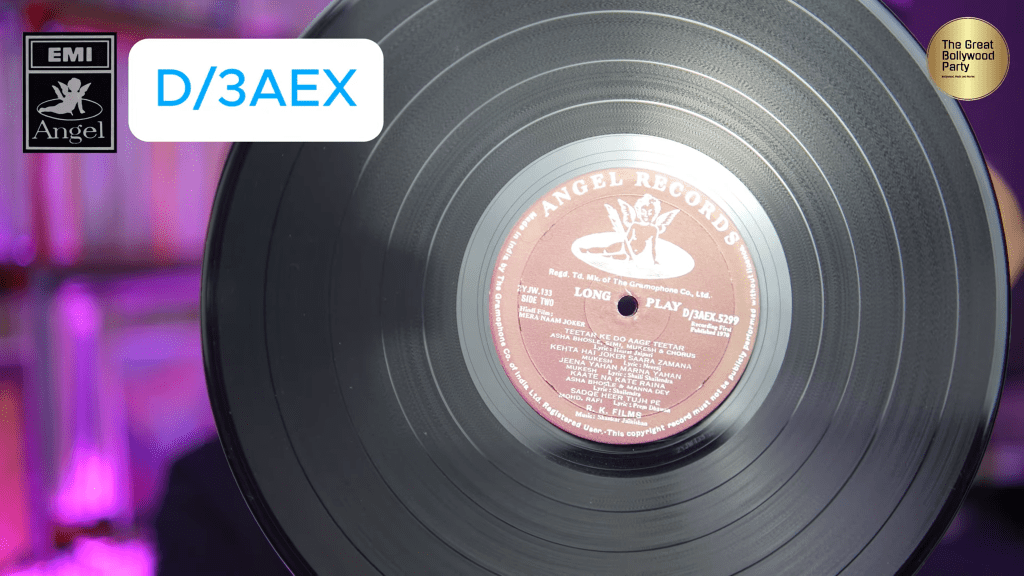
The Heartbreak: Mera Naam Joker
It “saddens me a bit,” as a collector, to hear the evergreen melodies of Shankar-Jaikishan marred by this process. The Mera Naam Joker soundtrack is a masterpiece, yet its original double LP release was “sorted” with this fake stereo treatment [13:13].
To hear the difference, one must track down the rare 7-inch EP releases where HMV occasionally preserved the original, warm mono recordings.
A Final Note on the “Tinny” Sound
While this era was a commercial solution to a technical problem, it paved the way for the high-fidelity sound we enjoy today. However, for the true purist, nothing beats the original mono format.
These reprocessed versions have sadly followed us into the digital age—appearing on CDs and streaming platforms today. It remains a testament to an era where the industry chose “market share” over “audio soul.”
What are your thoughts on “Fake Stereo”? Do you own any of these D/ series LPs? Let us know in the comments below!
Keep the Needle Dropping: Join the Conversation
If you’re someone who believes that every crackle and pop on a vintage record tells a story, you’re in the right place. We are on a continuous mission to preserve the true sonic integrity of the Golden Era, one deep dive at a time. Don’t let the history of our music fade away—join our growing community of collectors, audiophiles, and history buffs by subscribing to @thegreatbollywoodparty868. Hit that notification bell to ensure you never miss our next investigation into the labels, tracks, and technical tales that defined Bollywood’s legendary sound. Let’s keep the vinyl spinning!
 The Great Bollywood Party